

About the Program
Protecting human rights is the foundation of law. The Human Rights Program at the University of Virginia allows students to explore the range of opportunities available in the human rights field, at home and abroad, through hands-on experiences. The program is the hub for human rights activities at the Law School, and cooperates with student groups, faculty members, the Public Service Center and Career Services, and human rights organizations to coordinate speakers, events, summer and postgraduate employment, and pro bono opportunities.
Through our Human Rights Listserv, we provide information about human rights–related jobs and fellowship opportunities. To join, contact Cindy Derrick.
Shiri Krebs
Human rights discourse has become central to the global debates about treatment of and solutions for refugees and displaced persons. Following the...
The constitutional rules that govern how states engage with international law have profound implications for foreign affairs, yet we lack...
Recent Supreme Court decisions have severely curtailed the reach of the Alien Tort Statute (ATS), making it nearly impossible to hold multinational...
More
In a highly influential book, Not Enough, Samuel Moyn argues that the modern human rights movement has failed to address economic inequality. Moyn...
Charles Crabtree
How do international laws affect citizens' willingness to accept refugees? In full and partial democracies, citizens' attitudes can influence national...
This paper is a contribution to an upcoming issue of Law and Contemporary Problems devoted to work originating in the Conference, “What’s Next for...
Faculty Director(s)
Nelson Camilo Sánchez León
Associate Professor of Law, General Faculty
Director, Human Rights Program
Director, International Human Rights Law Clinic
Mila Versteeg
Henry L. and Grace Doherty Charitable Foundation Professor of Law
Director, Human Rights Program
Senior Fellow, Miller Center
Shiri Krebs
Human rights discourse has become central to the global debates about treatment of and solutions for refugees and displaced persons. Following the...
The constitutional rules that govern how states engage with international law have profound implications for foreign affairs, yet we lack...
Recent Supreme Court decisions have severely curtailed the reach of the Alien Tort Statute (ATS), making it nearly impossible to hold multinational...
More
In a highly influential book, Not Enough, Samuel Moyn argues that the modern human rights movement has failed to address economic inequality. Moyn...
Charles Crabtree
How do international laws affect citizens' willingness to accept refugees? In full and partial democracies, citizens' attitudes can influence national...
This paper is a contribution to an upcoming issue of Law and Contemporary Problems devoted to work originating in the Conference, “What’s Next for...
This concluding essay to the “Future of Human Rights Scholarship” special issue outlines how political scientists could draw on developments in law...
Human rights discourse has been likened to a global lingua franca, and in more ways than one, the analogy seems apt. Human rights discourse is a...
Lucas Kowalczyk
The issues of mass migrations, displaced persons, and refugees from war-torn countries are not new, but they have become particularly prominent and...
Adam S. Chilton
The human rights movement has spent considerable energy developing and promoting the adoption of both international and domestic legal prohibitions...
Cosette D. Creamer
In their essay, "The Influence of History on States’ Compliance with Human Rights Obligations," Adam Chilton and Eric Posner conclude that modern...
As the U.N. Charter’s drafters might have predicted, various categories of cases have arisen since 1945 in which states have sought to use force in...
Adam S. Chilton
Although the question of whether constitutional rights matter is of great theoretical and practical importance, little is known about whether...
Adam S. Chilton
The prohibition of torture is one of the most emblematic norms of the modern human rights movement, and its prevalence in national constitution has...
Many view constitutional incorporation of international human rights treaties as the most effective way to enforce treaty rights domestically. Three...
Several states have been engaged for years in armed conflicts against non-state actors outside their territory. These conflicts implicate a wide...
Benedikt Goderis
Constitutions are commonly regarded as uniquely national products, shaped by domestic ideals and politics. This paper develops and empirically tests a...
Benedikt Goderis
Constitutions are commonly regarded as uniquely national products, shaped by domestic ideals and politics. This paper develops and empirically tests a...
As a candidate for President, Barack Obama made “change” a central theme of his campaign. In particular, he railed against the Bush Administration’s...
More
It has been suggested, with growing frequency, that the United States may be losing its influence over constitutionalism in other countries because it...
Benedikt Goderis
After 9/11, the United States and its allies took measures to protect their citizens from future terrorist attacks. While these measures aim to...
A fairly substantial amount of literature has been generated over the years regarding the forms of masculinity that emerge in times of armed conflict...
On the Frontlines gives a comprehensive overview of the post-conflict terrain as it is experienced by women across multiple jurisdictions and in the...
This paper explores the situation of women returning to their homes and communities after their countries have experienced major conflicts. In that...
This essay provides an overview of federal involvement in foster care, starting with the 1909 White House Conference on Dependent Care, to show the...
This paper, written for a symposium on The Mind of a Child, examines two different aspects of the accountability of children: those children who are...
A critical issue for post conflict reconstruction is moving beyond criminal prosecutions that ensure accountability of perpetrators toward a system...
Beyond Retribution and Impunity: Responding to War Crimes of Sexual Violence articulates principles for an approach to gender-based violence during...
Resident Faculty
Resident Faculty
Criminal procedure and criminal defense law
Law and economics, international relations, international law, immigration and refugee law, judging
Criminal law, feminist jurisprudence and women's issues
Race and law, constitutional law, employment discrimination
Civil rights, constitutional history and constitutional law
Tax policy, legislative process and legal ethics
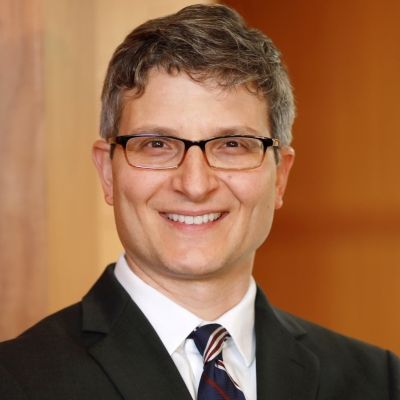
Legislation, election law, law and economics, and direct democracy
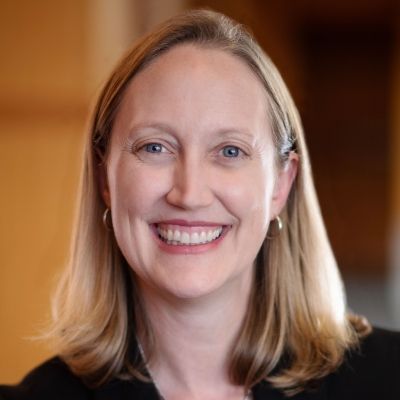
First Amendment, constitutional law and torts
International human rights law, Inter-American human rights system, business and human rights, transitional justice
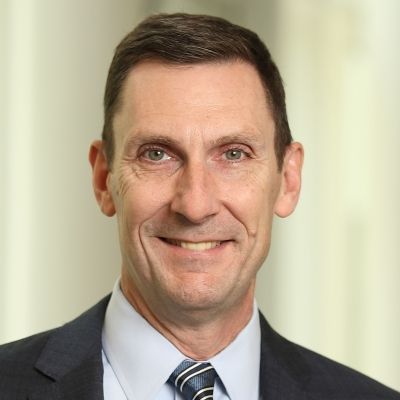
Constitutional law, antitrust and communications regulation, national security
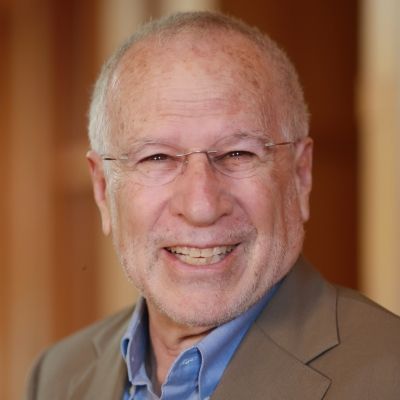
Constitutional law, evidence and legal reasoning, philosophy of law
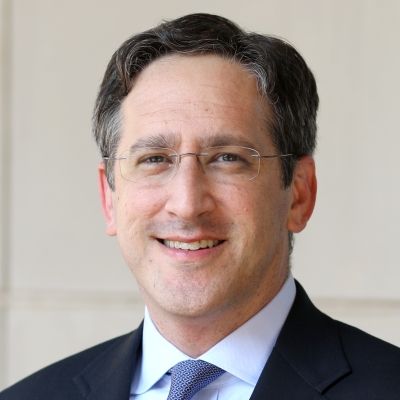
Law and religion, jurisprudence and political philosophy
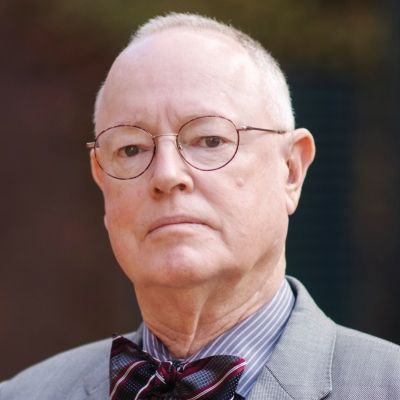
International law, business and economics
Comparative law and human rights
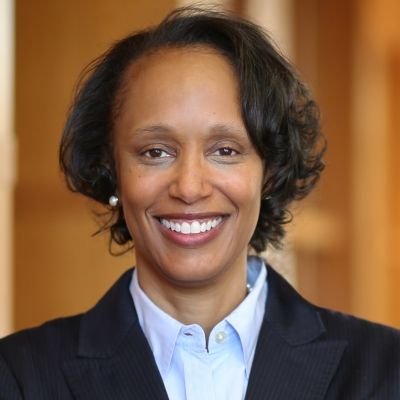
Education law, Civil rights, Affirmative action, Desegregation and integration, Race, Sexual discrimination and harrassment

Federal court system and civil procedure
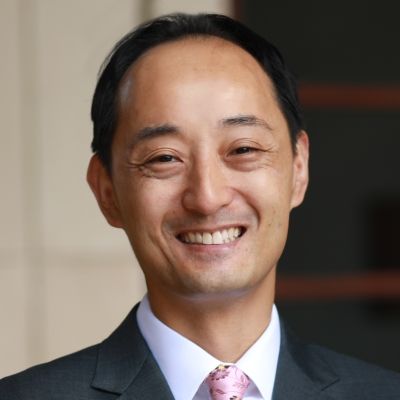
Comparative and empirical study of public law, courts and legal texts
Health policy, LGBTQ rights
Other Faculty
Civil procedure, conflict of laws, evidence
International Human Rights Clinic
Directed by professor Nelson Camilo Sánchez León, the International Human Rights Law Clinic is the core of the program. The clinic offers students practical experience in human rights advocacy in collaboration with human rights lawyers and nongovernmental organizations in the United States and abroad. Clinic students have worked in the following areas:
- Reparations for slavery and other historical injustices
- Deprivation of migrants’ liberty
- Gender equality and sports
- Human rights defenders at risk
- Human rights impacts of air pollution
- Access to health care in Venezuela
- National security in the war on terror
- Freedom of information and expression
- Gender-based violence, women’s and LGBT rights
- Rights of indigenous people
- Legal literacy and empowerment
- Right to life and prohibition against torture
- Human rights in the Middle East
- Corporate liability for human rights violations
- Land law and housing rights
- Transitional justice/responsibility to protect and fulfill human rights
Clinic students have worked on the following projects:
U.N. SPECIAL RAPPORTEUR ON VIOLENCE AGAINST WOMEN Organized a roundtable with U.S. gender and rights advocates; drafted briefing paper on the due diligence standard; coordinated and edited five civil society briefing papers for the special rapporteur’s official U.S. visit; contributed to the special rapporteur’s 2013 thematic report on the development of due diligence standards and consistency between international and regional treaties
HUMAN RIGHTS WATCH Researched Israel’s legal obligations with regard to land and housing rights of its indigenous population for a published report: “Off the Map: Land and Housing Rights Violations in Israel’s Unrecognized Bedouin Villages”
WOMEN’S JUSTICE INITIATIVE (Guatemala, founded by Kate Flatley ’08) Designed training modules on international human rights law, gender-based violence, and inheritance and property rights for indigenous Guatemalan women
CENTER FOR CONSTITUTIONAL RIGHTS (New York) Researched for plaintiffs’ legal team in the case of Al Shimari v. CACI, a federal lawsuit brought by four Iraqi torture victims against private U.S.-based contractor CACI International Inc. and CACI Premier Technology Inc.
CENTER FOR JUSTICE IN INTERNATIONAL LAW (Washington, D.C.) Wrote amicus brief for the Inter-American Court on Human Rights in support of petitioners in the case of Benito Tide Méndez et al. v. Dominican Republic
CENTRO PARA LA ACCIÓN LEGAL EN DERECHOS HUMANOS, PROGRAM ON THE RIGHTS OF INDIGENOUS PEOPLES (Guatemala) Prepared comparative analyses of draft legislation and policy initiatives concerning indigenous peoples in the Congress of the Republic of Guatemala.
CENTER FOR JUSTICE AND ACCOUNTABILITY (San Francisco) Consulted with U.S. Senate staffers on a U.S. Supreme Court amicus curiae brief in Samantar v. Yousef regarding congressional intent as to whether the Foreign Sovereign Immunities Act should be a bar to remedies under the Torture Victim Protection Act, and drafted the brief for the proceeding in the 4th U.S. Circuit Court of Appeals
FOREST PEOPLES PROGRAM (U.K./Netherlands) and ASSOCIATION OF INDIGENOUS VILLAGE LEADERS IN SURINAME Developed a manual and workshops for indigenous leaders in Suriname on the right to education
AMERICAN CIVIL LIBERTIES UNION NATIONAL SECURITY PROJECT Drafted a complaint regarding the release of information on Guantanamo Bay deaths and detainees’ suicide and homicide attempts

Ukrainian national Olena Protsenko was working on a postdoctoral research project at the University of Virginia School of Law when her homeland was invaded. With the help of eight UVA Law students, she is suing Russia on behalf of individual clients for war crimes in the European Court of Human Rights.
Professor Camilo Sánchez, director of the International Human Rights Law Clinic and co-director of UVA Law’s Human Rights Program, describes the school’s offerings in the international human rights field and why this is an exciting time to study the subject. This session was part of UVA Law’s 2022 Admitted Students Open House.
Courses and Seminars
The Law School curriculum has included a number of courses focused on human rights in recent years. The following is a list of courses offered during 2021-24. Numbers in parentheses indicate which academic year(s) the courses were offered, i.e., 2021-22 is coded (22), 2022-23 is coded (23) and 2023-24 is coded (24). (SC) stands for short course and (YR) stands for yearlong.
Advanced Topics in Law and Public Service (22,23,24)
After Dobbs (SC) (23)
Asian Americans and the Law (23,24)
Capitalism and Socialism Seminar (22)
Civil Rights and Antidiscrimination Law (23)
Civil Rights Litigation (22,23,24)
Comparative Gender Equality (23,24)
Constitutional Law and Economics (23,24)
Constitutional Law II: Freedom of Speech and Press (22,23,24)
Constitutional Law II: Poverty (22,23)
Constitutional Law II: Survey of Civil Liberties (22,23,24)
Current Issues in Human Rights Law (YR) (22)
Housing Law and Poverty Seminar (22,23,24)
Human Rights Study Project (YR) (23,24)
Immigration Law and Policy (22)
Immigration Law and Policy Lecture (23,24)
International Human Rights Law (22,23,24)
Law and Inequality Colloquium (23,24)
Law of Armed Conflict (23,24)
Law, Inequality and Education Reform (22)
Native American Law (24)
Perspectives on Sovereignty: Native American Law (23)
Political Prisoners (SC) (24)
Privacy Torts (24)
Race, Education and Opportunity (22,23)
Racial Justice and Law (22,23,24)
Sexuality and the Law (22,23,24)
Voice and Silence in Law and Literature Seminar (24)
After Dobbs (SC) (23)
Asian Americans and the Law (23,24)
Capitalism and Socialism Seminar (22)
Civil Rights and Antidiscrimination Law (23)
Civil Rights Litigation (22,23,24)
Comparative Gender Equality (23,24)
Constitutional Law and Economics (23,24)
Constitutional Law II: Freedom of Speech and Press (22,23,24)
Constitutional Law II: Poverty (22,23)
Constitutional Law II: Survey of Civil Liberties (22,23,24)
Current Issues in Human Rights Law (YR) (22)
Housing Law and Poverty Seminar (22,23,24)
Human Rights Study Project (YR) (23,24)
Immigration Law and Policy (22)
Immigration Law and Policy Lecture (23,24)
International Human Rights Law (22,23,24)
Law and Inequality Colloquium (23,24)
Law of Armed Conflict (23,24)
Law, Inequality and Education Reform (22)
Native American Law (24)
Perspectives on Sovereignty: Native American Law (23)
Political Prisoners (SC) (24)
Privacy Torts (24)
Race, Education and Opportunity (22,23)
Racial Justice and Law (22,23,24)
Sexuality and the Law (22,23,24)
Voice and Silence in Law and Literature Seminar (24)
Clinics
Advanced International Human Rights Clinic (22,23)
Civil Rights Clinic (YR) (22,23,24)
First Amendment Clinic (YR) (22,23,24)
Housing Litigation Clinic (YR) (23,24)
Immigration Law Clinic (YR) (22,23,24)
International Human Rights Law Clinic (YR) (22,23,24)
Litigation and Housing Law Clinic (YR) (22,23)

Professor Mila Versteeg of the University of Virginia School of Law finds in her new co-authored book that citizens’ ability and willingness to push back are essential to constitutional protections.

Lobsang Sangay, regent of the Central Tibetan Administration, delivers the Human Rights Program spring lecture. Sangay discusses his experiences leading a government in exile, representing the Tibetan diaspora, and advocating for political autonomy and power for greater Tibet.
Human Rights Study Project
Now a for-credit course, the project's mission is to further the study of law affecting the protection of basic rights in foreign countries. Each year a project team of students travels abroad to research human rights issues in a specific country and report their findings.
HRSP Trip Reports
- Argentina (2023)
- India (2020)
- Nepal (2019)
- Myanmar (2018)
- Zambia (2017)
- Colombia (2016)
- Myanmar (2015)
- Ghana (2014)
- Madagascar (2013)
- Sri Lanka (2012)
- Malawi (2011)
- Egypt (2010)
- Cambodia (2009)
- Uganda (2008)
- India (2007)
- China (2006)
- Lebanon and Syria (2005)
- Sierra Leone (2004)
- Cuba (2003)
John Bassett Moore Society of International Law
The J.B. Moore Society is a driving force in international law activities at the Law School. Each year, the Society hosts a symposium on topics such as the war on terror and corruption in foreign governments, as well as a lunch lecture series in which international law faculty and foreign graduate students present papers. The Society sponsors a Jessup International Law Moot Court team and coordinates with the Charlottesville office of the International Rescue Committee to help recently settled refugees.

Students in the University of Virginia School of Law’s Human Rights Study Project traveled to Kenya to research global health interdependence, rights-based health care and women’s rights.
Students in the Human Rights Study Project at the University of Virginia School of Law took part in a once-in-a-lifetime trip to Nepal in January 2019. They were joined by alumni for a trek to Mount Everest base camp. The trip was sponsored by philanthropist David C. Burke ’93.
Events at UVA Law
Since its inception in 2003, the Human Rights Program has brought leading figures in the field to the Law School. Recent events and speakers include:
Organ Harvesting in China, with David Matas, a renowned human rights lawyer
India Under Modi: The Difficulties of Being a Minority, with human rights advocate Harsh Mander in a candid conversation with UVA professor Neeti Nair
The War on Drugs: Then and Now, with Teresa García Castro from the Washington Office on Latin America and Sanho Tree from the Institute for Policy Studies
Law and War: An International Humanitarian Law Student Workshop, with experts from the International Committee of the Red Cross and the American Red Cross, military judge advocates and UVA Law professors
An Insider’s Look at the Paris Agreements on Climate Change, with Susan Biniaz, Legal Advisor's Office, State Department
Restricting the Use of the Death Penalty: Judicial Activism in the Commonwealth, with Saul Lehrfreund, The Death Penalty Project
Global Supply Chains, Corporate Responsibility, and the Limits of the Law, with best-selling author Corban Addison '04
Human Rights Lawyering: Current Trends, Threats and Opportunities, and How You Can Make Your Mark on This Field, with EarthRights International co-founder Katie Redford '95
The Living Legacy of Uganda’s ‘Kill the Gays’ Bill: A Conversation on Transnational Advocacy for LGBTI Rights in Uganda, with Dr. Frank Mugisha, Richard Lusimbo and Nahal Zamani
On the Horizon: National Security Priorities for the New Administration, with Beth Collins, Board Member, Privacy and Civil Liberties Oversight Board
Continued Violation and Denial of Women’s Land and Property Rights in Southern Africa, with Brigadier Siachitema, Southern Africa Litigation Center
Hunger Games? Reflections on Autonomy, the Value of Life and the State's Prerogatives in Dealing with Hunger Strikers, with UVA Law Professor Gil Siegal
Recognizing the Rights of LGBT Communities Through U.S. Human Rights and Development Policy, with Mark Bromley ’95, council chair for the Council for Global Equality
Burma’s Democratic Transition: Challenges and Opportunities, with the president of U.S. Campaign for Burma and other experts
The Extra-Territorial Application of the International Covenant on Civil and Political Rights, with U.S. Army Maj. Matthew Lund (JAG Corps) and UVA law professors Ashley Deeks and Mila Versteeg
A Transitional Justice Strategy for Syria, with Mohammad Al Abdullah of the Syria Justice and Accountability Center and Balkees Jarrah of the International Justice Program and Human Rights Watch
Corporate Liability in U.S. Courts for Global Actions, with EarthRights International Legal Director Marco Simons and Professor Brandon Garrett
Crossing Borders: Rethinking International Development, a symposium sponsored by the Virginia Journal of International Law and the J.B. Moore Society of International Law; with keynote address by Hassane Cissé, deputy general counsel for knowledge and research for at the World Bank
Jessica Lenahan (Gonzales) v. United States of America, with Jessica Lenahan
The Crime of incitement: Propaganda and Media in International Criminal Tribunal Judgments, with Professor Richard A. Wilson, director of Human Rights Institute, University of Connecticut
The Human Face of Modern Slavery: Sex Trafficking at Home and Abroad, with author Corban Addison '04
Outside of the Box Luncheon: A Conversation With Joseph Zogby '96, chief counsel and staff director, U.S. Senate Judiciary Subcommittee on the Constitution, Civil Rights and Human Rights
Drone Warfare and International Law: Finding Balance Between New Security Challenges, State Sovereignty and Protection of Human Rights
Litigating Corporate Human Rights Abuses in a Post-Kiobel World, with Jonathan Kaufman, counsel for EarthRights International
Measuring Human Rights: Indicators, Metrics and Evidence-Based Practice, with New York University law professor Margaret L. Satterthwaite
All the Missing Souls: A Personal History of the War Crimes Tribunals, with David Scheffer, the first U.S. ambassador-at-large for war crimes issues and professor and director of the Center for International Human Rights at Northwestern University School of Law
Rashida Manjoo, U.N. Special Rapporteur on Violence Against Women and UVA Distinguished International Fellow in Residence and visiting research professor
Private Military Contractors and the Fight for Accountability for Human Rights Abuses, with Gabor Rona, international legal director of Human Rights First and a representative from the U.N. working group on mercenaries, and Katherine Gallagher, senior staff attorney at the Center for Constitutional Rights
Lucy Reed, partner and co-head of the global international arbitration group, Freshfields Bruckhaus Deringer; arbitrator of the Eritrea-Ethiopia Claims Commission; former president of the American Society of International Law, International Tribunals and Victim Compensation
Property, Indigenous Autonomy, and International Law: The Forestry Law Case in the Colombian Constitutional Court, with Daniel Bonilla, law professor and director of the Public Interest Law Group, Universidad de los Andes, Bogota, Colombia
Constitution-Making and the Arab Spring, a conference on how revolutions in Egypt and Tunisia may result in positive changes on human rights and other issues
Multi-Track Peace Initiatives in Entrenched National Conflicts: Observations From Lebanon and Nepal, with Derek Brown, executive director of the Peace Appeal Foundation

In a case brought to light by the University of Virginia School of Law’s International Human Rights Clinic, six environmental activists’ convictions were overturned in Honduras.

Victor Madrigal-Borloz discusses his work as U.N. independent expert on protection against violence and discrimination based on sexual orientation and gender identity. The talk marked the Human Rights Program kickoff for the year.
Careers
UVA Law faculty mentor students on fellowship and career opportunities, and students are invited to join an email list to regularly receive job and fellowship announcements. The faculty, many of whom have worked abroad, also offer a significant networking resource for those interested in human rights work. Students who intend to work in the United States and abroad have access to Public Service Summer Grants of $4,000 (first year) and $7,000 (second year) from the student-run Public Interest Law Association.
Summer Fellowships
The student-run Public Interest Law Association offers grants, from approximately $4,000 to $7,000, to help fund a broad array of summer public interest opportunities. In recent summers, students worked for:
- Asylum Access (Quito, Ecuador)
- Center for Human Rights Legal Action (Guatemala City)
- Institute for International Law and Human Rights (Washington, D.C.)
- International Bridges to Justice (New Delhi, India)
- International Center for Transitional Justice (Cape Town, South Africa)
- International Justice Mission (Guatemala City and Manila, Philippines)
- Minority Rights Group International (London)
- Parliamentary Monitoring Group (Cape Town, South Africa)
- Center for Applied Legal Studies, Gender Unit, University of Witwatersrand (Johannesburg, South Africa)
- U.N. International Criminal Tribunal for Rwanda (Arusha, Tanzania)
- Secretariat of Pacific Communities (Fiji)
See Where Public Service Summer Grantees Worked.
Postgraduate Fellowships
Several opportunities for public international law related fellowships are available to Virginia graduates, including:
Orrick International Law Fellowship
Provides $55,000 in funding for 3L students or recent graduates who are pursuing clerkships with an international tribunal or constitutional court.
Application Information | Related Article
Orrick Fellowship for the International Court of Justice Traineeship Program
Virginia Law is one of a select group of American law schools that nominate candidates for a clerkship with the ICJ. The Orrick International Court of Justice Traineeship Fellow receives up to $55,000 to support the nine-month clerkship, which is open to graduates in the five most recent classes.
Application Information | Related Article
Monroe Leigh Fellowship in International Law
Provides a total of $10,000 for one or two students to pursue a public international law project of their own during a summer internship, during their third year, or after graduation.
Application Information | Related Article
The Law School’s Financial Aid Office also offers a generous loan forgiveness program for students who take lower-paying public service positions after graduation.
Alumni Network
The program maintains a network of recent graduates involved in the human rights law field. Alumni employers include:
- International Criminal Tribunal for the Former Yugoslavia
- Canadian Centre for International Justice
- Center for Constitutional Rights
- Center for National Security Studies
- Law firm Burke O’Neil
- EarthRights International
- Freedom House
- Council for Global Equality
- The Iran-U.S. Claims Tribunal
- Harvard Law School Human Rights Clinic
- Resettlement Legal Aid Project
- Section 27
- U.S. Senate Judiciary and Armed Services committees
- U.N. Office of Legal Affairs
- Women's Justice Initiative
Human Rights Listserv
Through the human rights listserv, the Program provides students information about human rights jobs and fellowship opportunities. To join the listserv, contact Cindy Derrick.

University of Virginia School of Law professor Darryl Brown produced a Clooney Foundation TrialWatch report highlighting violations of international law and due process in the conviction of Azerbaijani opposition leader Tofig Yagublu.

Sanho Tree, the director of the Drug Policy Project at the Institute for Policy Studies, and Teresa García Castro, an associate with the Drug Policy Program at WOLA, spoke about the history of the war on drugs and the impact it has today on counternarcotics efforts and incarceration of women, respectively. This event was sponsored by UVA Law’s Human Rights Program.