

About the Program
Lawyers cannot fully understand the American legal landscape without studying the impact of race. The Law School founded the Center for the Study of Race and Law in 2003 to provide opportunities for students, scholars, practitioners and community members to examine and exchange ideas related to race and law through lectures, symposia and scholarship. The center also coordinates with the Law School to offer a concentration of courses on race and law, and serves as a resource for faculty whose teaching or scholarship addresses subjects related to race.
Supreme Court opinions involving race and the jury invariably open with the Fourteenth Amendment, the Civil Rights Act of 1875, or landmark cases like...
Brandon Charles Osowski
On January 1, 2022, the most radical change to the American jury in at least thirty-five years occurred in Arizona: peremptory strikes, long a feature...
Aurelie Ouss
Courts routinely use low cash bail as a financial incentive to ensure that released defendants appear in court and abstain from crime. This can create...
Jens Frankenreiter
The lawyer-client relationship is pivotal in providing access to courts. This paper presents results from a large-scale field experiment exploring how...
For much of the twentieth century, the U.S. government authorized and invested heavily in segregation and racial inequality. Often it did so through...
Jennifer L. Doleac
We evaluate the impacts of adopting algorithmic risk assessments as an aid to judicial discretion in felony sentencing. We find that judges' decisions...
Faculty Director(s)
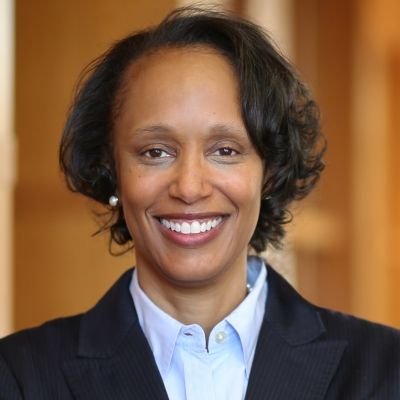
Kimberly J. Robinson
Martha Lubin Karsh and Bruce A. Karsh Bicentennial Professor of Law
Professor of Education, School of Education and Human Development
Professor of Law, Education and Public Policy, Frank Batten School of Leadership and Public Policy
Director, Education Rights Institute
Director, Center for the Study of Race and Law
Supreme Court opinions involving race and the jury invariably open with the Fourteenth Amendment, the Civil Rights Act of 1875, or landmark cases like...
Brandon Charles Osowski
On January 1, 2022, the most radical change to the American jury in at least thirty-five years occurred in Arizona: peremptory strikes, long a feature...
Aurelie Ouss
Courts routinely use low cash bail as a financial incentive to ensure that released defendants appear in court and abstain from crime. This can create...
Jens Frankenreiter
The lawyer-client relationship is pivotal in providing access to courts. This paper presents results from a large-scale field experiment exploring how...
For much of the twentieth century, the U.S. government authorized and invested heavily in segregation and racial inequality. Often it did so through...
Jennifer L. Doleac
We evaluate the impacts of adopting algorithmic risk assessments as an aid to judicial discretion in felony sentencing. We find that judges' decisions...
Many jurisdictions determine real property taxes based on a combination of current market values and the recent history of market values, introducing...
The purpose of the Equal Rights Amendment (ERA) to those who drafted it and those who worked for nearly a century to see it ratified, is women’s...
Peremptory strikes, and criticism of the permissive constitutional framework regulating them, have dominated the scholarship on race and the jury for...
Sandra G. Mayson
Recent scholarship has underlined the importance of criminal misdemeanor law enforcement, including the impact of public-order policing on communities...
This article addresses a significant challenge to federal Indian law currently emerging in the federal courts. In 2013, the Supreme Court suggested...
On August 11 and 12, 2017, Charlottesville, Virginia — the home of the University of Virginia and this law journal — played unwitting host to two days...
Justice Thomas’s dissent in Flowers v. Mississippi has been met with disdain in the popular press. In the New Yorker, Jeffrey Toobin declared Justice...
In my response to reviews by Christopher Agee, Christopher Schmidt, Karen Tani, and Laura Weinrib, I explain some of the challenges of writing Vagrant...
This chapter presents the view that discrimination is wrong when and because it is demeaning. In order to demean, an action must both express...
This chapter resurrects, conceptualizes and defends an old account of why disparate impact discrimination sometimes wrongs its victims. In Local 189...
The phenomenon of implicit bias is much discussed but little understood. This article answers basic conceptual and empirical questions about...
Disputes, disagreement, ambiguity, and ambivalence have marked the law of affirmative action since it came to prominence in the Civil Rights Era...
In August 2017, hundreds of white supremacists came to Charlottesville, Virginia, ostensibly to protest the city council’s decision to remove a...
Since the end of Reconstruction, the criminal jury box has both reflected and reproduced racial hierarchies in the United States. In the Plessy era...
Sandra Mayson
This Article seeks to provide the most comprehensive national-level empirical analysis of misdemeanor criminal justice that is currently feasible...
What drives administrative officials to enforce the Constitution—or not? This Article recovers a forgotten civil rights struggle that sheds light on...
What causes black infants to die at two to three times the rate of white infants and what can be done to address those causes? For decades, every...
A philosophical battle is being waged for the soul of Equal Protection jurisprudence. One side sees discrimination as a comparative wrong occurring...
The Supreme Court’s initial decision in Fisher v. University of Texas, cast great doubt upon affirmative action in higher education. Fisher I required...
Constitutional theorists in the United States once believed courts could protect politically disfavored minorities from the excesses of democracy...
This study compared two forms of accountability that can be used to promote diversity and fairness in personnel selections: identity-conscious...
Philip E. Tetlock
Due to concerns about the willingness and ability of people to report their attitudes accurately in response to direct inquiries, psychologists have...
Greenwald, Banaji and Nosek (2015) present a reanalysis of the meta-analysis by Oswald, Mitchell, Blanton, Jaccard and Tetlock (2013) that examined...
Of the many audiences for Richard Brooks and Carol Rose’s Saving the Neighborhood, the one I will talk about today, perhaps unsurprisingly, is the...
This essay challenges the three related claims embedded within Professor Ackerman’s assertion that the distinctive wisdom of Chief Justice Warren’s...
This symposium essay summarizes our ongoing ethnographic research on corporate board diversity, discussing the central tension in our respondents’...
It is not always easy to identify a new field or a new paradigm for an old field. It can creep up on you - a book here or an article there. But there...
There are at least two competing ways of understanding when laws or other actions by governments wrongfully discriminate. On one view, the wrong...
This article reports a meta-analysis of studies examining the predictive validity of the Implicit Association Test (IAT) and explicit measures of bias...
This Article describes the results from fifty-seven interviews with corporate directors and a limited number of other persons (including...
Judicial interpretations of the Equal Protection Clause have undergone a major transformation over the last fifty years. A Supreme Court once...
Equal educational opportunity remains elusive within the United States. The nation’s education landscape reveals that too often students’ backgrounds...
Max Schanzenbach
The U.S. Sentencing Guidelines restrict judicial discretion in part to reduce unwarranted racial disparities. However, judicial discretion may also...
Can religion or race ever be the basis for legitimate government policies? For several decades, constitutional law concerning both religion and race...
Hart Blanton
The authors reanalyzed data from a set of studies — J. D. Heider and J.J. Skowronski (2007) — that explored links between the race IAT and...
Patrick S. Shin
Diversity initiatives are commonplace in today’s corporate America. Large and successful firms frequently tout their commitments to diversity...
In this article, we report the results of a series of interviews with corporate directors about racial, ethnic, and gender diversity on corporate...
In this Article, we report and analyze the results of forty-six wide-ranging interviews with corporate directors and other relevant insiders on the...
The Supreme Court’s decision in Brown v. Board of Education held that separate education facilitates were “inherently unequal.” After tolerating...
More
In 2007, the U.S. Supreme Court ruled in Parents Involved in Community Schools v. Seattle School District No. 1 that the racial classifications used...
Goluboff’s essay describes the critical role played by individuals bringing cases through organizations like the NAACP or other avenues to the state...
There are at least two different historical approaches to constitutional interpretation. The first is what constitutional scholars most readily...
Biases in judgment and decision-making often arise at the level of first-order thoughts. If these initial thoughts are not overridden by second-order...
Existing accounts of early gay rights litigation largely focus on how the suppression and liberation of gay identity affected early activism. This...
What forms of discrimination are likely to be salient in the coming decade? This Essay flags a cluster of problems that roughly fall under the...
Lissa Lamkin Broome
The ethnic and gender make-up of corporate boards has been the subject of intense public and regulatory focus in many countries, including the United...
During World War II, the lawyers of the NAACP considered the problem of discrimination in employment as one of the two most pressing problems (along...
In recent decades, the study of race has achieved increasing prominence in the legal academy. Legal scholarship on race, including but not limited to...
Devon W. Carbado
Racing to the top of the corporate hierarchy is difficult, no matter how qualified or capable the candidate. Producing more widgets than one's...
Underlying the debate over affirmative action and reparations for black Americans is a dispute about the extent to which American society is...
In the Michigan affirmative action cases, the Supreme Court not only reaffirmed the result of the 1978 decision in Board of Regents of the University...
Devon W. Carbado
Legal academics often perceive law and economics (L&E) and critical race theory (CRT) as oppositional discourses. Using a recently published...
This paper explores the constitutional implications of race-neutral affirmative action, i.e., governmental efforts to pursue affirmative action goals...
Court reformers continue to debate over efforts to select juries more diverse than are typically achieved through existing procedures. Controversial...
The purpose of this Note is to question whether racial matching by courts and child-placement agencies serves the best interests of Black children...
Resident Faculty
Resident Faculty
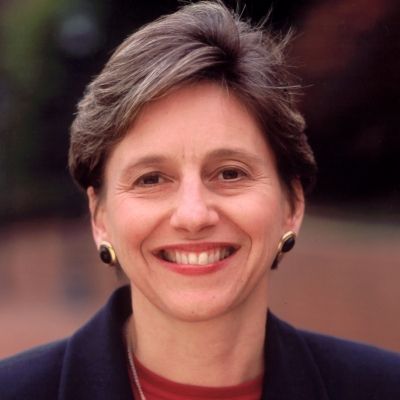
Criminal procedure, civil rights litigation, torts and constitutional law
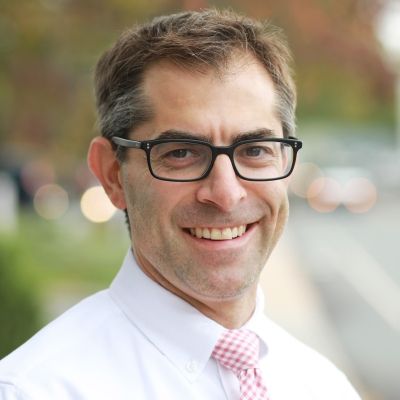
Criminal procedure and criminal defense law

Criminal law, evidence and procedure

Family law, trusts and estates, feminist jurisprudence, reproductive technology, and aging and the law

Law and economics, international relations, international law, immigration and refugee law, judging

Criminal law, feminist jurisprudence and women's issues

Tax policy, legislative process and legal ethics

Civil rights, constitutional history and constitutional law
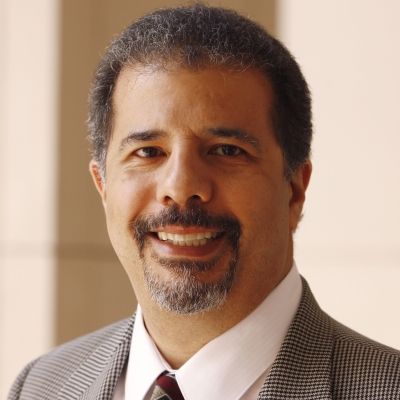
Race and law, constitutional law, employment discrimination

Criminal law, civil rights, race

Post-conviction relief, innocence, death-penalty cases

Criminal law, criminal procedure, policing and civil rights
Affirmative action and equal protection, constitutional law and theory
Contracts, property and real estate; critical race theory

Social science in law, mental health law, forensic psychiatry
Education law, Civil rights, Affirmative action, Desegregation and integration, Race, Sexual discrimination and harrassment
Employment discrimination, civil rights and admiralty, civil procedure and international civil litigation

International human rights law, Inter-American human rights system, business and human rights, transitional justice

Separation of church and state, property, local government and land use
Domestic relations and family law

Comparative law and human rights

Federal court system and civil procedure

Civil rights, constitutional law, legal history, law and inequality
Health policy, LGBTQ rights

Federal courts, constitutional law, civil procedure, legal theory

Legal aid, civil rights, impact litigation

Other Faculty
Civil procedure, conflict of laws, evidence


Education law, Civil rights, Affirmative action, Desegregation and integration, Race, Sexual discrimination and harrassment
Constitutional law, election law, constitutional theory, legislation and statutory interpretation
Curriculum
Virginia offers courses in civil rights and anti-discrimination law, but equally important is a wide array of courses in constitutional law and history. These offerings reflect the ways in which the struggle for civil rights shaped — and continues to shape — our country and institutions.
Each year the Center for the Study of Race and Law brings a visiting professor to teach a short course. Past visitors include:
- Richard Banks, Stanford Law School
- Dorothy Brown, Emory Law School
- Devon Carbado, UCLA School of Law
- Mohammad Fadel, University of Toronto Faculty of Law
- Adrienne Davis, Washington University in St. Louis
- Michael Klarman, Harvard Law School
- Mari Matsuda, University of Hawai‘i at Manoa William S. Richardson School of Law
The following is a list of courses offered during 2021-24. Numbers in parentheses indicate which academic year(s) the courses were offered, i.e., 2021-22 is coded (22), 2022-23 is coded (23) and 2023-24 is coded (24). (SC) stands for short course and (YR) stands for yearlong.
Courses and Seminars
American Legal History Seminar (23)
Asian Americans and the Law (23,24)
Center for Race and Law Short Course: Islam, Race and the Law in the Americas (SC) (22)
Civil Rights and Anti-discrimination Law (23)
Civil Rights Litigation (22,23,24)
Constitutional Law II: Poverty (22,23)
Criminal Adjudication (22,23,24)
Criminal Investigation (22,23,24)
Criminal Procedure Survey (22,23,24)
Critical Race Theory (23)
Critical Race Theory (SC) (24)
Designing Democracy: Participation (23)
Education Law Survey (22,23)
Employment Discrimination (22,23,24)
Family Law (22,23,24)
Identity, Law and Politics Seminar (22)
Immigration Law and Policy (22)
Immigration Law and Policy Lecture (23,24)
International Human Rights Law (22,23,24)
Land Use Law (22,23)
Law and Inequality Colloquium (23,24)
Law, Inequality and Education Reform (22)
Native American Law (24)
Parental Choice in K-12 Education (SC) (23)
Poverty in Law, Literature and Culture (23)
Poverty Law and the Lawyer’s Role (24)
Poverty Law, Advocacy and Policy (22,23)
Project for Informed Reform (22)
Race and Criminal Justice (22,23,24)
Race and Slavery on UVA’s North Grounds (23,24)
Race, Class and Democratic Legitimacy (SC) (24)
Race, Education and Opportunity (22,23)
Race, Law and School Policing (SC) (23)
Racial Justice and Law (22,23,24)
Regulation of the Political Process (22,23)
Reparations: Identity, Law and Politics (23)
School Desegregation, School Integration (24)
Social Science in Law (22,23,24)
Urban Law and Policy (23,24)
Asian Americans and the Law (23,24)
Center for Race and Law Short Course: Islam, Race and the Law in the Americas (SC) (22)
Civil Rights and Anti-discrimination Law (23)
Civil Rights Litigation (22,23,24)
Constitutional Law II: Poverty (22,23)
Criminal Adjudication (22,23,24)
Criminal Investigation (22,23,24)
Criminal Procedure Survey (22,23,24)
Critical Race Theory (23)
Critical Race Theory (SC) (24)
Designing Democracy: Participation (23)
Education Law Survey (22,23)
Employment Discrimination (22,23,24)
Family Law (22,23,24)
Identity, Law and Politics Seminar (22)
Immigration Law and Policy (22)
Immigration Law and Policy Lecture (23,24)
International Human Rights Law (22,23,24)
Land Use Law (22,23)
Law and Inequality Colloquium (23,24)
Law, Inequality and Education Reform (22)
Native American Law (24)
Parental Choice in K-12 Education (SC) (23)
Poverty in Law, Literature and Culture (23)
Poverty Law and the Lawyer’s Role (24)
Poverty Law, Advocacy and Policy (22,23)
Project for Informed Reform (22)
Race and Criminal Justice (22,23,24)
Race and Slavery on UVA’s North Grounds (23,24)
Race, Class and Democratic Legitimacy (SC) (24)
Race, Education and Opportunity (22,23)
Race, Law and School Policing (SC) (23)
Racial Justice and Law (22,23,24)
Regulation of the Political Process (22,23)
Reparations: Identity, Law and Politics (23)
School Desegregation, School Integration (24)
Social Science in Law (22,23,24)
Urban Law and Policy (23,24)
Clinics
Civil Rights Clinic (YR) (22,23,24)
International Human Rights Law Clinic (YR) (22,23,24)
Project for Informed Reform Clinic (YR) (23,24)

Chief Judge Roger L. Gregory of the U.S. Court of Appeals for the Fourth Circuit discusses the importance of diversity and accountability in the legal profession, then joins a conversation with Mark C. Jefferson, UVA Law’s assistant dean for diversity, equity and belonging. The event was part of the Breaking Grounds Speaker Series, sponsored by the Black Law Students Association as part of Black History Month.
Exploring Race Through Discussion
The Center for the Study of Race and Law coordinates and promotes the substantial array of existing Law School programs on race and law, and enhances these offerings by sponsoring additional programs, often in partnership with interested student organizations.
UVA Law honored the legacy of its first Black student, Gregory Swanson ’51, with a ceremony and the creation of the Gregory H. Swanson Award, which recognizes students with traits that Swanson embodied, including a commitment to justice within the community.
UVA history professor John Mason and UVA Law vice dean Leslie Kendrick ’06 were among those to discuss the events surrounding the Aug. 11-12 “Unite the Right” rally in Charlottesville. Throughout the year at UVA Law in various fora, community members gathered to understand the violent rallies and how to move forward, and promote allyship with the Black Law Students Association.
UCLA law professor Cheryl Harris, an expert in critical race theory, recently discussed how race and class became competing legal arguments for addressing inequality.
Civil rights pioneer Morris Dees, founder of the Southern Poverty Law Center, discussed the fight for racial and social justice in the South during the 1960s and 1970s, and challenges that remain today.
H. Timothy Lovelace, an Indiana University law professor and 2006 UVA Law graduate, recently spoke in honor of Martin Luther King Jr.
Other recent center-sponsored events include:
Community MLK Celebration with Justice John Charles Thomas ’75
A Constitutional History of the Long 1960s, with Professor Risa Goluboff
“Must Government Ignore Racial Inequality?” with Professor Kim Forde-Mazrui
“Race, Inequality and the Future of Multiracial Politics,” with Georgetown law professor Sheryll Cashin
“Affirmative Action Revisited: Fisher v. University of Texas,” Ward Connerly, the founder and president of the American Civil Rights Institute, and UVA law professor Kim Forde-Mazrui on the legality of affirmative action in higher education
“Felony Disenfranchisement,” a town-hall meeting sponsored by the Mid-Atlantic Black Law Students Association and the UVA Law Black Law Students Association
“Bending Toward Justice: The Struggle for Civil Rights Today,” with Mary Bauer ’90, legal director of the Southern Poverty Law Center, part of Martin Luther King Jr. Day observances
“The Future of the Voting Rights Act: A Discussion About Shelby County v. Holder and What It Means for America,” with UVA Law professor Risa Goluboff and Ridge Schuyler, former Virginia counsel for Obama for America
“Does Reparations Have a Future? Rethinking Racial Justice in a ‘Color-Blind’ Era,” a multidisciplinary symposium on the 150th anniversary of the Civil War featuring UVA Law professor Kim Forde-Mazrui
“Representing Children: Dealing With Racial Inequalities in Schools and in the Juvenile Justice System,” with Robert Schwartz, co-founder and executive director of the Juvenile Law Center
“The Final Days of Martin Luther King Jr.,” (with civil rights leader and then-UVA professor Julian Bond and Michael Cody ’61) and “What We Can Learn About the Law From the Life of Dr. Martin Luther King Jr.,” (with two UVA law professors) were part of a series of events in January 2012 remembering King’s legacy
“Increasing Diversity Within the Legal Profession,” a conference featuring lectures by NAACP General Counsel Kim Keenan ’87 and Virginia Supreme Court Justices S. Bernard Goodwyn ’86 and Cleo Powell ’82
Annual Reports on Center Activities

Christopher Williams, a Ph.D. candidate at the University of Chicago, has been awarded a Race, Place and Equity fellowship at the University of Virginia School of Law.
UVA Law lecturer Tiffany Graves ’06 of Bradley Arant Boult Cummings, Theodore Howard of Wiley Rein, Paul S. Lee of Steptoe & Johnson and Kathleen Wach of Miller & Chevalier Chartered share their experiences of advancing racial justice in their pro bono practice. Professor Kimberly Jenkins Robinson moderates the event, which was sponsored by the Center for the Study of Race and Law.
Law School Student Organizations
- Asian Pacific American Law Students Association (APALSA)
- Black Law Students Association (BLSA)
- The Human Rights Study Project (HRSP)
- Jewish Law Students Association (JLSA)
- Latin American Law Organization (LALO)
- Middle Eastern and North African Law Student Association (MENA)
- Muslim Law Students Association (MLSA)
- Student Bar Association (SBA)
- South Asian Law Student Association
- Women of Color
Diversity, Equity and Belonging at UVA Law
The Diversity, Equity and Belonging website collects and shares resources and information for community members, and presents a history of diversity at the Law School.
University Research Centers
In addition to the Center for the Study of Race and Law, the University offers numerous other research centers, departments and programs that address racial and cultural diversity.
- The Carter G. Woodson Institute for African-American and African Studies
- Center for South Asian Studies
- Department of East Asian Languages, Literatures and Cultures and Department of Middle Eastern and South Asian Languages and Cultures
- East Asia Center
- Institute for Advanced Studies in Culture
- The Lorna Sundberg International Center

The University of Virginia School of Law chapter of the Black Law Students Association has been named 2021-22 Mid-Atlantic chapter of the year.
John Charles Thomas ’75 (Col ’72), the first Black justice on the Supreme Court of Virginia, discusses the legacy of Martin Luther King Jr. and how his struggles reverberate today. Dean Risa Goluboff interviewed Thomas and presented the Gregory H. Swanson Award to Yewande Ford ’23. Professor Kim Forde-Mazrui introduced Thomas. The event was part of the University’s 2023 Community MLK Commemoration.
Recent Events
“The Poetic Justice,” With John Charles Thomas ’75
Story| Jan. 26, 2023
As part of the University of Virginia’s Community MLK Celebration, John Charles Thomas ’75 (Col ’72), the youngest and first Black justice to serve on the Supreme Court of Virginia, will speak at the Law School about the legacy of Martin Luther King Jr. and how his struggles reverberate today.
Inside Sines v. Kessler: A Case Holding White Supremacists Accountable
Story | Jan. 25, 2022
A panel will explore a successful civil lawsuit against organizers, promoters and participants in the 2017 Unite the Right rally. At the conclusion of the litigation Nov. 23, a jury found the defendants liable under Virginia law, for both civil conspiracy and racial, religious and ethnic harassment. During the event, the 2022 Gregory H. Swanson Award will be presented. Named after UVA’s first Black student, the award recognizes UVA law students who demonstrate courage, perseverance and a commitment to justice.
From the Equal Rights Amendment to Black Lives Matter: Reflecting on Intersectional Struggles for Equality
Story | Jan. 29, 2021
This virtual symposium will explore the intersectional nature of race and sex (including LGBTQ+) equality movements, the contributions of activists with intersectional identities, and the potential role of intersectional theories to inform future efforts to advance race and sex equality. The symposium will culminate in a keynote speech by Elaine R. Jones ’70 at 1:50 p.m. Jones is the first Black woman to graduate from UVA Law School — 50 years ago — and the first woman to serve as director-counsel and president of the NAACP Legal Defense and Educational Fund. During the event, the 2021 Gregory H. Swanson Award will be presented. Named after UVA’s first Black student, the award recognizes UVA law students who demonstrate courage, perseverance and a commitment to justice.
Healing Hate: A Public Health Perspective on Civil Rights in America
Story | Jan. 30-31, 2020
Hosted by the University of Virginia Schools of Law, Nursing and Medicine, this conference focused on the impact of racial and ethnic discrimination in driving public health disparities. The program brought together scholars, clinicians, policymakers and community leaders to take a public health approach in treating and reducing violence, disease and injury due to racism, hate speech, crimes and violence.
At the conclusion of the event, participants announced a civil rights framework to combat health disparities, and generated and disseminated evidenced-based proposals and tools aimed at eliminating health disparities.
“Biased,” With Jennifer Eberhardt
Story | Jan. 21, 2020
Jennifer Eberhardt, a social psychologist at Stanford University, was the featured speaker at the Law School’s Community MLK Celebration event. She discussed her 2019 book “Biased: Uncovering the Hidden Prejudice That Shapes What We See, Think, and Do.” Eberhardt is a 2014 MacArthur Genius Grant recipient, has been elected to the National Academy of Sciences and the American Academy of Arts and Sciences, and was named one of Foreign Policy’s 100 Leading Global Thinkers.
During the event, Dean Risa Goluboff presented the 2020 Gregory H. Swanson Award. Named after UVA and UVA Law’s first black student, the award recognizes students who demonstrate a commitment to justice within the community.
The Hard Work of Social Justice: A Conversation With Women of August 11-12
Jan. 31 2019
This event discussed the work of social justice activism focusing on Aug. 11 and 12, 2017, and on women who countered the terrorism of those days before, then and since. The event features the film, “Charlottesville,” which documents the events leading up to and including Aug.11-12. The second half was a panel discussion with women activists, followed by participation from the audience.
During the event, the Law School presented the annual Gregory H. Swanson Award, given to a law student who exemplifies “courage, perseverance and a commitment to justice.”
One Year After Charlottesville: Replacing the Resurgence of Racism With Reconciliation
Story | Sept. 27-28, 2018
This conference examined the United States' history of racism, racial violence and white supremacy, and where it stands today through the lens of empirical critical race theory. Pulitzer Prize winner James Forman Jr. headlined the conference. It was sponsored by UVA Law, the school’s Center for the Study of Race and Law, the Carter G. Woodson Institute and the Virginia Law Review, and marked the one-year anniversary of the August 2017 “Unite the Right” rally in Charlottesville.
“We’re trying to take back the discourse so it’s no longer about giving a voice to white supremacy and nationalism,” said Professor Dayna Bowen Matthew ’87, an organizer of the event. “We’re trying to speak for and with people who have been harmed and silenced by hate in all its manifestations.”