Environmental challenges are rarely simple. From climate change to state and federal energy policies to historic resources preservation, the challenges of sustainability and long-term environmental health raise complex scientific, ethical, economic and political questions that defy easy answers.
Through classes, research opportunities, symposium and clinic work, PLACE at UVA Law School empowers students to confront these questions so they can build the practical skills, analytic tools and hands-on experience needed to effect change as environmental leaders in government, business and the not-for-profit sector.
The program combines outstanding legal teaching with opportunities for interdisciplinary study, clinical experience, skills training and scholarly inquiry. Interacting with faculty who research and shape the law at the local, regional and global levels, students at the Law School experience environmental law firsthand as it is practiced today, and study how it can better meet the next generation of challenges. With a wide range of courses, conferences, student groups and opportunities for independent study, students at the Law School are part of a vibrant intellectual community that crosses boundaries of academic disciplines and between practice and scholarship.
The Setting
Nestled in the foothills of the Blue Ridge Mountains, Charlottesville and surrounding Albemarle County provide a beautiful and fruitful setting for the study of land use and environmental issues. The area faces regional growth concerns, including the need to protect biodiversity and open space, provide affordable housing, and respond to climate change. These sometimes conflicting policy demands test relationships among urban, suburban and rural communities, all at a scale that makes the issues realistically accessible to student investigators. The proximity of the Shenandoah National Park, the Jefferson National Forest and the Chesapeake Bay (the Law School is in the bay watershed) provides further opportunity to study problems in regional growth, natural resource policy and watershed management.
It is commonly assumed that local land use regulations—and especially single-family and other restrictive zoning classifications—limit housing supply...
In 2021, the U.S. Supreme Court decided PennEast Pipeline Co. v. New Jersey. The case is often associated with a theory of private delegation--that is...
It is commonly assumed that local land use regulations—and especially single-family and other restrictive zoning classifications—limit housing supply...
In 2021, the U.S. Supreme Court decided PennEast Pipeline Co. v. New Jersey. The case is often associated with a theory of private delegation--that is...
This chapter first explains how the federal Clean Water Act is linked with the implementation of other major environmental laws in the United States...
This Article documents and seeks to explain a significant shift in how we construct natural gas pipelines in the United States. Natural gas pipelines...
Contributions to solving the globe’s environmental crisis are properly expected to come from every country to a greater or lesser degree depending on...
In the United States the primary tool to value greenhouse gas emissions reductions in cost-benefit analysis is the social cost of carbon (SCC), which...
The United States has long been an urban country, but it is fast becoming a metropolitan one. Population and economic activity are now concentrated in...
The ‘social cost of carbon’ is an economic concept that represents – in monetary net present value terms – the damages caused by the emission of a ton...
This essay, prepared for a symposium hosted by the William & Mary Environmental Law and Policy Review and the Virginia Coastal Policy Clinic, focuses...
This Essay examines and explains the positions of the principal interest groups over the past four decades with respect to the two central questions...
This paper explicates the four building blocks underlying emission standard guidelines in the U.S. EPA's proposed clean power plan for reducing carbon...
PLACE at UVA includes numerous elective courses and seminars, including several interdisciplinary classes co-taught by law professors and faculty in urban planning, environmental sciences and the humanities. Students also undertake independent research projects on subjects of their choosing. Recent topics have included climate change nuisance claims, land conservation in the Chesapeake Bay watershed, and the governance of the National Trails System.
The following is a list of courses that have been offered in recent years. Given the rapidly advancing legal environment, the program’s course offerings continue to evolve to address the most pressing environmental, energy, climate and planning developments. Numbers in parentheses indicate which academic year(s) the courses were offered, i.e., 2023-24 is coded (24), 2024-25 is coded (25) and 2025-26 is coded (26). (SC) stands for short course and (YR) stands for yearlong.
Climate and Debt (24) Climate Law and Climate Ethics (24) Conservation Planning and Law (24,25,26) Contemporary Housing Policy Debates (25) Energy Regulation and Policy (24,26) Environmental Law (24,25,26) Housing Law and Poverty Seminar (24,25,26) Land Use Law (25) Law of Public-Private Partnerships (24,25,26) Monument Litigation (SC) (25) Natural Resources Law and Policy (25) Property, the Police Power and Emergencies (24,25) Public Utility Regulation Seminar (25) Real Estate Transactions and Litigation (SC) (26) State and Local Government Law (24) Theory and Practice of Biodiversity Conservation (25,26) The Business of Sport (26) Urban Law and Policy (24,26) Water Law and Policy (26) Wildlife Advocacy (SC) (26)
Clinics
The program offers three clinics and other experiential class and externship offerings that address pressing environmental and urban planning related issues.
Students may receive Law School credit for related graduate courses offered by other departments and schools in the University, including classes on topics such as preservation planning, land use policy, ecology, climatology and business-government relations. Students can obtain joint degrees in law and land use planning, business or environmental sciences.
University of Virginia School of Law professors Richard Schragger and Cale Jaffe ’01 discuss why some states are pushing back against data centers and the situation in Virginia, which has the largest concentration of facilities anywhere.
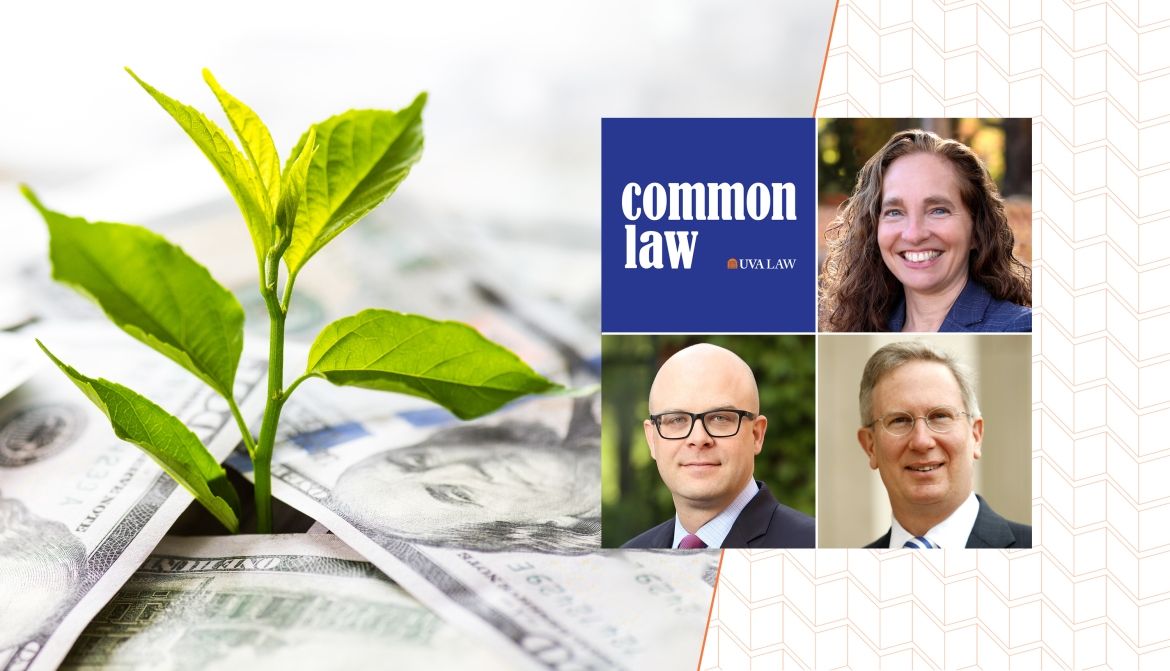
The practice of investing in funds and companies that pay attention to environmental, social and corporate governance issues could be at a turning point, say UVA Law professors Quinn Curtis and Paul G. Mahoney.
PLACE at UVA includes numerous elective courses and seminars, including several interdisciplinary classes co-taught by law professors and faculty in urban planning, environmental sciences and the humanities. Students also undertake independent research projects on subjects of their choosing. Recent topics have included climate change nuisance claims, land conservation in the Chesapeake Bay watershed, and the governance of the National Trails System.
The following is a list of courses that have been offered in recent years. Given the rapidly advancing legal environment, the program’s course offerings continue to evolve to address the most pressing environmental, energy, climate and planning developments. Numbers in parentheses indicate which academic year(s) the courses were offered, i.e., 2023-24 is coded (24), 2024-25 is coded (25) and 2025-26 is coded (26). (SC) stands for short course and (YR) stands for yearlong.
Climate and Debt (24) Climate Law and Climate Ethics (24) Conservation Planning and Law (24,25,26) Contemporary Housing Policy Debates (25) Energy Regulation and Policy (24,26) Environmental Law (24,25,26) Housing Law and Poverty Seminar (24,25,26) Land Use Law (25) Law of Public-Private Partnerships (24,25,26) Monument Litigation (SC) (25) Natural Resources Law and Policy (25) Property, the Police Power and Emergencies (24,25) Public Utility Regulation Seminar (25) Real Estate Transactions and Litigation (SC) (26) State and Local Government Law (24) Theory and Practice of Biodiversity Conservation (25,26) The Business of Sport (26) Urban Law and Policy (24,26) Water Law and Policy (26) Wildlife Advocacy (SC) (26)
Clinics
The program offers three clinics and other experiential class and externship offerings that address pressing environmental and urban planning related issues.
Students may receive Law School credit for related graduate courses offered by other departments and schools in the University, including classes on topics such as preservation planning, land use policy, ecology, climatology and business-government relations. Students can obtain joint degrees in law and land use planning, business or environmental sciences.
University of Virginia School of Law professors Richard Schragger and Cale Jaffe ’01 discuss why some states are pushing back against data centers and the situation in Virginia, which has the largest concentration of facilities anywhere.
The practice of investing in funds and companies that pay attention to environmental, social and corporate governance issues could be at a turning point, say UVA Law professors Quinn Curtis and Paul G. Mahoney.
Students in the semester-long Environmental Law and Community Engagement Clinic have the opportunity to work on real-world environmental problems in a variety of venues — legal advocacy before courts, expert testimony before administrative agencies and coalition building directly with the communities impacted by environmental harm.
The clinic has represented a diverse array of public-interest clients in recent years, from a community group working to preserve an early 20th-century black schoolhouse, to local governments filing an amicus brief in the Supreme Court of the United States. In addition to working on in-house clinic cases, students also have the option of working closely with attorneys at the Southern Environmental Law Center, a nationally prominent environmental law and policy organization that is headquartered in Charlottesville. The clinic is available to new students in both fall and spring. Students participating in the fall may request to continue to the advanced clinic in the spring on a first-come, first-served basis.
Students participate in advising on, developing, and litigating actual housing cases.
This yearlong clinical course is offered in partnership with the Legal Aid Justice Center. The caseload includes trials, administrative proceedings and interaction with low-income clients. Students handle eviction and voucher termination cases, abatement of substandard building conditions and other enforcement of residents' rights, although specific assignments vary according to the cases available during the year. The course also incorporates classroom instruction during the fall semester in the substantive and procedural aspects of landlord-tenant law and litigation skills.
This seminar explores planning techniques and legal issues surrounding protection of landscapes of natural, historical and cultural value and public uses of those landscapes. Students’ work is client-oriented and project-based. Prospective projects include extension of the Rivanna Trail system; protection of conservation easements in the Blue Ridge Mountains; development of trails connecting the University’s Morven Farm with adjacent historical and natural sites and linking Charlottesville to the Shenandoah National Park; and the creation of parks and conservation areas within the region. Students have the opportunity to research the legal and institutional means by which natural and cultural sites are recognized and protected, issues of public use, access and liability, property instruments used in the creation of conservation sites (fee ownership, easements, leases), etc. Students also participate in field trips to relevant sites.
Externships
Students may have the opportunity to seek out environmentally focused externships.
University of Virginia School of Law students helped write an amicus brief cited in a landmark Montana climate change case, highlighting the skills and experiences they are gaining through the school’s environmental law clinic.
Professor Cale Jaffe ’01 explains the inspiration behind his article “The Climate Whisperers” and how it connects with programs aimed at addressing climate change across the country.
On Feb. 23, Virginia Gov. Abigail Spanberger nominated Professor and PLACE Co-Director Cale Jaffe ’01 to serve on the Virginia Air Pollution Control Board.
Amid a backlash against investment funds with environmental, social and governance goals, UVA Law professor Quinn Curtis researched whether obituaries for ESG were premature.
University of Virginia School of Law alum Sam Backfield ’01, an attorney with the Federal Energy Regulatory Commission, and Emma Clancy ’19, an attorney at the Southern Environmental Law Center, have visited classes recently to share their experiences with students.
A new article from University of Virginia School of Law professor Michael Livermore offers a new way to look at the value of an endangered species and how should we conceptualize the harm of extinction.
This past summer, UVA Law students explored the practice of environmental law through internships around the country. PLACE spoke to Patrick Flynn ’27, Pietro Guarisco ’27 and Sarah Templeton ’26 about their experiences at a climate litigation nonprofit, an environmental agency, and in the environmental practice at a major international law firm.
The UVA Environmental Institute’s biannual Environmental Futures Forum convened researchers, practitioners and community leaders this fall to discuss the institute’s research, trends in environmental science and policy, and community solutions. The event also highlighted environmental issues in Virginia and globally, including the rapid expansion of data centers and coastal flooding on the Virginia coast.
Professor Cale Jaffe ’01has been appointed to Gov.-elect Abigail Spanberger’s natural resources policy transition team. Previously, Jaffe was appointed to the Virginia Coal and Energy Commission by Gov.
Jay Johnson ’01, who pressed for a narrower application of the National Environmental Policy Act (NEPA) in front of the U.S. Supreme Court during the last term, spoke at the Law School about his case on Sept. 30.
On Sept. 25, the student-run Virginia Environmental Law Forum held its fourth annual Environmental Law Roundup, an event highlighting recent regulatory, legislative and judicial developments in environmental law. Professors Alison Gocke, Leon Szeptycki and Cale Jaffe from PLACE shared insights on pressing issues shaping the field at both the state and national level.
The Law School's support for learning opportunities in environmental and land use law goes deeper than course offerings.
PLACE Projects
With funds provided in part by the Henry L. & Grace Doherty Charitable Foundation, PLACE sponsors teaching, discourse, research and community engagement on questions of environmental law and social justice as they relate to diverse communities and places. Areas of focus for these special projects include environmental justice; the connections between urban and rural environments; relationships among processes at local, regional and global scales; social and environmental changes affecting communities; and law’s role in defining and protecting the values of places.
Adapting to impacts and mitigating greenhouse gas emissions present critical trade-offs at the community scale, and between communities and broader scales. A central concern of PLACE is the laws, policies and other tools that are needed to help societies make these decisions in a fair and rational way.
Connecting With Students
Professor Alison Gocke, director of the Program in Law, Communities and the Environment, recently hosted students and faculty members interested in environmental law at her house.
Symposia
Over the past dozen years, the Law School has sponsored national conferences on growth management, nature conservation, environmental contracting, revitalization of contaminated land, transboundary watershed management and climate change. These symposia attracted leading practitioners and scholars and top government officials. Law students help plan these conferences and edit and publish the papers that emerge from them.
Virginia Environmental Law Journal
Founded in 1979 and managed and edited by students, the journal is a leader in environmental legal scholarship. Website
Virginia Environmental Law Forum
This popular and active student group hosts speakers and networking events, and sponsors law students who participate in environmental moot court and negotiation competitions. The forum, in cooperation with the Law School’s Mortimer Caplin Public Service Center, also provides pro bono opportunities to students interested in environmental law. Students may choose from a range of environmental pro bono projects on behalf of public interest and governmental clients that have requested assistance. Forum members also have opportunities to network with environmental law employers and professionals. Website
Public Service
The Law School has made a strong financial commitment to students choosing to pursue public interest careers. The school’s Mortimer Caplin Public Service Center helps students interested in environmental law find summer internships and postgraduate employment. Public Service Center
UVA Environmental Institute
The University of Virginia’s Environmental Institute supports interdisciplinary research and training at the intersection of environmental change and human well-being. The institute invests in interdisciplinary research, provides a hub for environmental resilience and climate change research, trains the next generation of leaders in integrative research and cultivates external partnerships to translate research findings across UVA into policy and practice.
Second-year University of Virginia School of Law student Bryce Campanelli discusses how his interest in energy policy led him to pursue a J.D., and he and his classmates’ plans to raise awareness of men’s mental health through running.
David Troutt of Rutgers Law School and Thad Williamson of the University of Richmond discuss pathways to racial and economic equity, with a focus on the effects of local and regional housing, employment and anti-poverty policies. UVA Law professor Richard Schragger moderated the event, hosted by PLACE: The Program in Law, Communities and the Environment. The event was the third in the program’s “PLACE and Power” series of virtual conversations exploring connections between human place-based relationships and the law and politics of environmental governance.
UVA Law’s Environmental Law and Community Engagement Clinic is featured in a documentary short that chronicles the fight to preserve a historic Black schoolhouse located in Cumberland County, Virginia. “Pine Grove: More Than a School” highlights the work of the AMMD Pine Grove Project, which has organized efforts to preserve the school, and the clinic, which took on the project as a client.
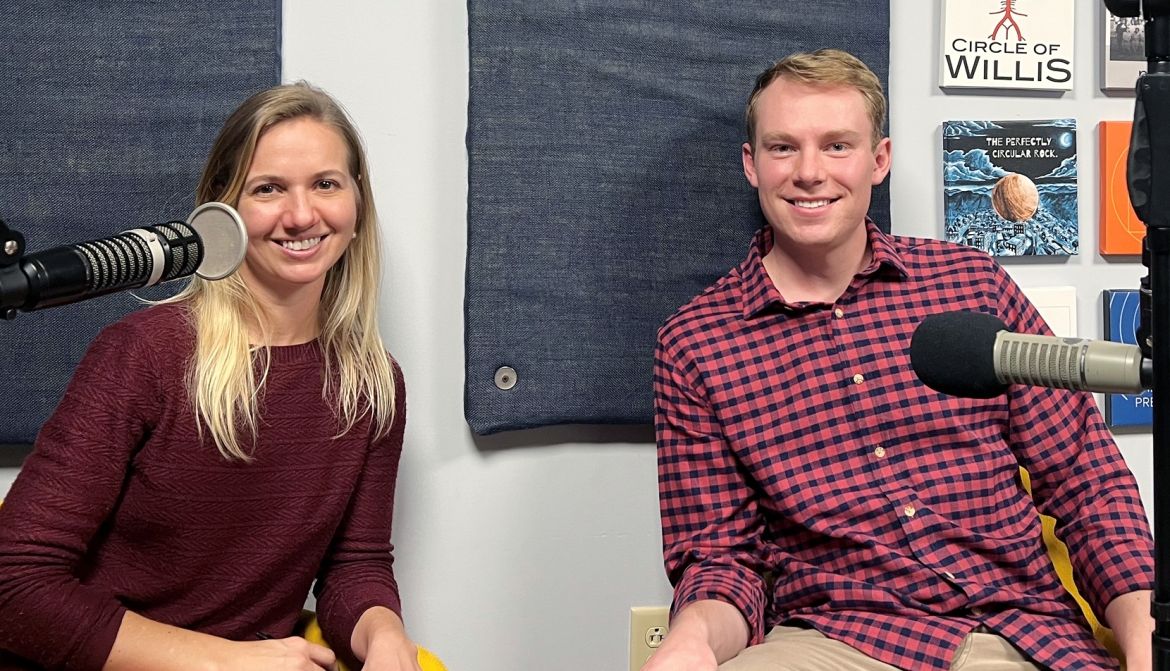
Listen to archived recordings of PLACE-affiliated professor Michael Livermore’s “Free Range” podcast, in which he interviews guests with a variety of academic and professional backgrounds, including journalism, law, politics, science, economics, philosophy and environmental science.
SEASON TWO
Natalie Jacewicz on Conservation and Abundance
Natalie Jacewic is a professor at the University of San Diego School of Law.
An impromptu roundtable discussion that was part of a working group at the Santa Fe Institute in February 2024 on biodiversity and the sustainable development goals.
Lisa Robinson is a senior research scientist and the deputy director at the Center for Health at the Harvard School of Public Health. She is a leading expert in the use of cost-benefit analysis to evaluate public policy.
Lisa Heinzerling on Environmental Law and the Supreme Court
Lisa Heinzerling is an environmental law professor at Georgetown University and former Associate Administrator of the Environmental Protection Agency's Office of Policy during the Obama administration.
Jessica Locke on Buddhism and Environmental Engagement
Jess Locke is an associate professor of philosophy at Loyola University, Maryland. She studies Buddhism, Western psychology, and cross-cultural philosophy.
Sabeel Rahman is a professor at Cornell Law School with substantial public policy experience, including as president of the think tank Demos and as senior counselor and then later as the acting Administrator in the Office of Information and Regulatory Affairs in the Biden administration. Rahman is also the author of the book “Democracy Against Domination” amongst other works.
Holly Doremus is a professor of environmental law at Berkeley and the co-director for the Berkeley Institute for Parks, People, and Diversity. Doremus has a interdisciplinary background with a PhD in Plant Physiology from Cornell in addition to her JD.
Curtis, Gulati, and Weidemaier on Empty Green Promisess
UVA Law professors Quinn Curtis and Mitu Gulati, and UNC-Chapel Hill Law professor Mark Weidemaier are all experts in the regulation of financial markets. They discuss their new paper, "Green Bonds and Empty Promises."
Ganesh Sitaraman & Shelley Welton on Networks, Platforms, and Utilities
Vanderbilt law professor Ganesh Sitaraman and University of Pennsylvania law professor Shelley Welton are experts in regulatory policy and are co-authors of a new case book Networks, Platforms, and Utilities.
Danae Hernandez-Cortes on Environmental Economics & Justice
Danae Hernandez-Cortes is an economist and professor in the School of Sustainability at Arizona State University who studies environmental justice and the distributional consequences of environmental policy.
Paul Stephan on the Knowledge Economy and Global Politics
Paul Stephan is a comparative and international law expert at UVA Law and author of the new book, “The World Crisis and International Law: The Knowledge Economy and the Battle for the Future,” recently published by Cambridge University Press.
Alex Wang is a professor of law at UCLA, co-director of the Emmett Institute on Climate Change and the Environment, and expert on the law and politics of Chinese environmental governance.
Alex Guerrero is a philosophy professor at Rutgers who writes in moral and political philosophy. He is a leading philosophical defender of the idea of lottocracy—the practice of choosing political leaders through lottery rather than elections.
UVA Law professor Rich Schragger is a leading expert on local government, federalism, and urban policy and the author of City Power: Urban Governance in a Global Age.
Michael Greenstone on Economics and Environmental Policy
Michael Greenstone is the Milton Freedman Distinguished Service Professor in Economics and the Director of the Energy Policy Institute at the University of Chicago. He served as the Chief Economist for President Obama’s Council of Economic Advisors and has worked for decades engaged in research and policy development on environmental issues.
Gerald Torres is a professor at the Yale School of the Environment and Yale Law School and director of the Yale Center for Environmental Justice. Torres explores the connections between environmental law and social justice from a scholarly and practical perspective.
Katherine Blunt is a journalist at The Wall Street Journal and the recent author of “California Burning: The Fall of Pacific Gas and Electric and What it Means for America’s Power Grid.”
Jonathan Colmer is an assistant professor at the University of Virginia’s Department of Economics and the director of the Environmental Inequality Lab. His research interests are in environmental economics, development economics and the distributional impacts of environmental policy.
Matthew Burtner is a professor of compositions and computer technologies in the music department at the University of Virginia. Burtner’s work explores ecology and the aesthetic link between human expression and environmental systems. His latest album is “Ice Field.”
Moira O’Neill is a professor of Urban and Environmental Planning at the University of Virginia who also has a joint appointment at UVA Law. Her work covers land use, climate change, equity and resilience. A specific area of her research is land use law and its relationship to housing affordability, integration and environmental impacts in California.
Ronald Sandler, a professor of philosophy at Northeastern University, writes on environmental ethics, emerging technologies and ethical issues surrounding climate change, food and species conservation. His books include “Environmental Ethics: Theory and Practice” and “The Ethics of Species.”
Jonathan Adler on Federalism and Environmental Law
Jonathan Adler is a law professor at Case Western Reserve University who writes on environmental law, federalism and regulation. In 2020, Brookings Institution Press published Adler’s edited “Marijuana Federalism: Uncle Sam and Mary Jane.”
Frances Moore is a professor of environmental science and policy at the University of California, Davis, whose work focuses on climate economics. Recently, Moore was the lead author of a paper in Nature that examines an important set of feedbacks between politics and the climate system.
Dale Jamieson on Environmental Ethics and Democracy
Dale Jamieson is a professor of environmental studies and philosophy at New York University. His most recent book, “Discerning Experts,” was published in 2019 by the University of Chicago Press.
Kimberly Fields on Environmental Justice and the States
Kimberly Fields is an assistant professor at UVA’s Woodson Institute of African-American and African Studies. Her recent work has focused on environmental justice, race and inequality at the state level.
Elizabeth Kolbert is a writer at The New Yorker, as well as the author of several books, including "The Sixth Extinction: An Unnatural History,” for which she won a Pulitzer Prize in 2015. Her most recent book, "Under a White Sky: The Nature of the Future,” was published in 2021.
Jennifer Cole and Michael Vandenbergh on Social Psychology and Climate Change
Jennifer Cole, a postdoctoral scholar in social psychology at the Vanderbilt Climate Change Research Network, and Michael Vandenbergh, the David Daniels Allen Distinguished Chair of Law at the Vanderbilt University Law School, talk about their work examining the political polarization of climate change and COVID-19 policies.
Cara Daggett on the Science and Politics of Thermodynamics
Cara Daggett, assistant professor of political science at Virginia Tech, talks about her new book “The Birth of Energy: Fossil Fuels, Thermodynamics, and the Politics of Work.”
Nicholas Agar is a moral philosopher who is currently a Distinguished Visiting Professor at Carnegie Mellon University, Australia. His most recent book, "How to Be Human in the Digital Economy,” was published by MIT Press in 2019.
Arden Rowell on the Psychology of Environmental Law
Arden Rowell is a professor of law at the University of Illinois College of Law. Rowell’s work focuses on environmental law, human behavior and the incorporation of a multidisciplinary approach to the study of environmental law. Her new book, "The Psychology of Environmental Law,” co-written with Kenworthey Bilz, was recently published by NYU Press.
Shi-Ling Hsu is the D’Alemberte Professor of Law and associate dean for environmental programs at the Florida State University College of Law. He is also the author of the book “Capitalism and the Environment: A Proposal to Save the Environment,” which was published in December 2021 by Cambridge University Press.
Karen Bradshaw is a professor of law and the Mary Sigler Research Fellow at Arizona State University’s Sandra Day O’Connor College of Law. Bradshaw’s work examines the intersection of environmental law and property law. Her most recent book, “Wildlife as Property Owners: A New Conception of Animal Rights,” contends that property rights can be a useful tool in the protection of endangered wildlife.
Jonathan Cannon retired from UVA Law in May 2021 after more than two decades of teaching at the law school. Prior to joining UVA Law, Cannon served as general counsel to the EPA, and his 1998 memo, which has come to be known as “the Cannon memo,” was influential in opening a path for EPA to regulate greenhouse gas emissions. He is currently writing a book about the significance of “place.”
Karen McGlathery is a professor at UVA’s Department of Environmental Sciences and the director of UVA’s Environmental Resilience Institute. McGlathery’s work centers on coastal ecosystems and the discussion today covers a number of different topics related to climate change and coastal communities.
Madison Condon on Climate and Corporate Governance
Boston University School of Law professor Madison Condon has written extensively on how corporations are changing their approach to the environment in the face of climate change issues and the rise of ESG investing, which incorporates environmental, social and governance considerations into larger investment strategies.
Willis Jenkins on the Humanities and Environmental Change
Willis Jenkins, the John Allen Hollingsworth Professor of Ethics and Department Chair of the Religious Studies Department at UVA, researches climate ethics, including religion and climate change; multispecies relations, including through food ethics; post-humanist political theologies; and religious thought amidst Anthropocene stresses. At UVA, he works with the environmental humanities program, teaches for the global sustainability major and environmental thought and practice majors, and serves on the leadership team of the Environmental Resilience Institute.
Lee Buchheit and Mitu Gulati on Debt-for-Nature Deals
UVA Law professor Mitu Gulati’s work focuses on sovereign debt restructuring and contracts, and explores how to help countries in financial distress. UVA Law lecturer Lee C. Buchheit retired in 2019 after a 43-year career with Cleary Gottlieb Steen & Hamilton, where his practice focused on international and corporate transactions.
UVA environmental sciences professor Deborah Lawrence is an expert on the links between tropical deforestation and climate change. She has spent the past 25 years doing field-based research in Indonesia, Costa Rica, Mexico and Cameroon.
University of Virginia School of Law professor Alison Gocke has won the 10th annual Morrison Prize for her article on the role public utility commissions can play in clean-energy transitions.
Abigail Dillen, president of Earthjustice, speaks with moderator Professor Cale Jaffe ’01 as part of the Lillian K. Stone Distinguished Lecture in Environmental Policy. Dean Leslie Kendrick ’06 gives introductory remarks.
University of Virginia School of Law professors Andrew Block and Richard Schragger have been named among the Karsh Institute of Democracy’s new Faculty Fellows.
Clinics at the University of Virginia School of Law represented inmates seeking parole, helped tenants facing eviction and taught teens about state government, among other accomplishments in the past year.
The University of Virginia School of Law’s donor-funded grant program and the student-run PILA+ program are together giving over $1 million to 171 students working in public interest roles this summer.
University of Virginia School of Law professors Richard Schragger and Cale Jaffe ’01 discuss why some states are pushing back against data centers and the situation in Virginia, which has the largest concentration of facilities anywhere.
In a new ranking, Professor Danielle Citron of the University of Virginia School of Law was the most-cited legal scholar of 2025 for work published from 2019-21, among other achievements and recognition for members of the Law School community.
Abigail Dillen, president of Earthjustice, speaks with moderator Professor Cale Jaffe ’01 as part of the Lillian K. Stone Distinguished Lecture in Environmental Policy. Dean Leslie Kendrick ’06 gives introductory remarks.
Students in UVA Law's Environmental Law and Community Engagement Clinic represent environmental nonprofits, citizens’ groups and other community organizations seeking to protect and restore the environment of Virginia and other parts of the country.
The practice of investing in funds and companies that pay attention to environmental, social and corporate governance issues could be at a turning point, say UVA Law professors Quinn Curtis and Paul G. Mahoney.
Third-year law students Casey Crowley and Elizabeth Putfark join Dean Blazer ’08 to discuss the many ways law students take advantage of UVA’s location in scenic Charlottesville, Virginia. Putfark, who will join the Southern Environmental Law Center as an associate attorney this fall, shares how UVA Law’s environmental law clinic, curriculum, faculty, and student organizations nurtured her legal education and set her on the path to success.
In a new paper, University of Virginia School of Law professor Alison Gocke examines how legal frameworks are in flux amid the transition to clean energy.
Erik Bodenhofer ’01, general counsel of Reebok International, discusses environmental, social and governance — known as ESG — issues from an in-house perspective. Professor Cale Jaffe ’01 moderated. The event was sponsored by the John W. Glynn Jr. Law & Business Program and the Program in Law
This meeting is open to all current and prospective VELF members. VELF provides a forum for law students interested in environmental issues and incorporating sustainable practices into their daily lives and careers. Throughout the year, the organization hosts events on topics such as climate change, energy, land use, natural resources and environmental justice, featuring leading experts in these fields. VELF also provides a social sphere for pro bono work, networking and the occasional outing at a local Charlottesville establishment celebrating the planet’s survival.
This event is sponsored by a student organization.
Abigail Dillen, president of Earthjustice, will deliver the Lillian K. Stone Distinguished Lecture in Environmental Policy at the University of Virginia. Professor Cale Jaffe ’01 will serve as moderator. Dean Leslie Kendrick ’06 will deliver introductory remarks. As president, Dillen leads the organization’s staff, board and supporters to advance Earthjustice’s mission of using the courts to protect the environment and public health. The lecture, made possible through a gift from University of Virginia alumni Thatcher Stone (Law ’82) and Frank Kittredge (Architecture ’78), is hosted jointly by the Schools of Architecture and Law. The lectureship is intended to fulfill the intellectual and educational commitments of the two schools by creating an opportunity for students to be educated in environmental policy and the National Environmental Policy Act. Food will be available beginning at 11:30 a.m. on a first-come, first-served basis.
The Virginia Environmental Law Journal is sponsoring the spring 2026 symposium: Behind and Beyond the Meter: Powering AI, Energy, and the Environment in the Commonwealth. This three-panel discussion centers around the growing data center industry in Virginia and associated environmental, energy and land use concerns. Food will be provided.
This event is sponsored by a student organization.
Join the Virginia Environmental Law Forum for an event with Seton Hall University professor Paul Rink, an environmental law scholar whose research focuses on climate change, strategic litigation, international environmental law, and environmental justice. Prior to teaching, Rink worked at the climate law firm, Our Children’s Trust, representing young people from around the world in strategic, legal efforts to secure their right to a safe climate system. The event will focus on the role that aspirational litigation ought to play in pursuing action on climate change, how strategic climate litigation claims have evolved over time and how climate litigation may change following recent decisions from international tribunals and an upcoming case before the Supreme Court, Suncor Energy, Inc. v. County Commissioners of Boulder County.
This event is sponsored by a student organization.
Environmental attorneys from across Virginia will be visiting for a moderated career panel where students can learn more about the diverse scope of environmental law in the state. The event will include lunch, the speakers panel and an opportunity for students to network with participating attorneys. Panelists include Rachel M. James, staff attorney with the Southern Environmental Law Center; Michael W. McLaughlin, senior vice president of SCS Engineers; Thomas N. Griffin III ’83, managing partner at Parker Poe Adams & Bernstein; and Astrika W. Adams, deputy general counsel of the U.S. Environmental Protection Agency. Food will be provided.
This event is sponsored by a student organization.
This meeting is open to all current and prospective VELF members. VELF provides a forum for law students interested in environmental issues and incorporating sustainable practices into their daily lives and careers. Throughout the year, the organization hosts events on topics such as climate change, energy, land use, natural resources and environmental justice, featuring leading experts in these fields. VELF also provides a social sphere for pro bono work, networking and the occasional outing at a local Charlottesville establishment celebrating the planet’s survival.
This event is sponsored by a student organization.
Abigail Dillen, president of Earthjustice, will deliver the Lillian K. Stone Distinguished Lecture in Environmental Policy at the University of Virginia. Professor Cale Jaffe ’01 will serve as moderator. Dean Leslie Kendrick ’06 will deliver introductory remarks. As president, Dillen leads the organization’s staff, board and supporters to advance Earthjustice’s mission of using the courts to protect the environment and public health. The lecture, made possible through a gift from University of Virginia alumni Thatcher Stone (Law ’82) and Frank Kittredge (Architecture ’78), is hosted jointly by the Schools of Architecture and Law. The lectureship is intended to fulfill the intellectual and educational commitments of the two schools by creating an opportunity for students to be educated in environmental policy and the National Environmental Policy Act. Food will be available beginning at 11:30 a.m. on a first-come, first-served basis.
The Virginia Environmental Law Journal is sponsoring the spring 2026 symposium: Behind and Beyond the Meter: Powering AI, Energy, and the Environment in the Commonwealth. This three-panel discussion centers around the growing data center industry in Virginia and associated environmental, energy and land use concerns. Food will be provided.
This event is sponsored by a student organization.
Join the Virginia Environmental Law Forum for an event with Seton Hall University professor Paul Rink, an environmental law scholar whose research focuses on climate change, strategic litigation, international environmental law, and environmental justice. Prior to teaching, Rink worked at the climate law firm, Our Children’s Trust, representing young people from around the world in strategic, legal efforts to secure their right to a safe climate system. The event will focus on the role that aspirational litigation ought to play in pursuing action on climate change, how strategic climate litigation claims have evolved over time and how climate litigation may change following recent decisions from international tribunals and an upcoming case before the Supreme Court, Suncor Energy, Inc. v. County Commissioners of Boulder County.
This event is sponsored by a student organization.
Environmental attorneys from across Virginia will be visiting for a moderated career panel where students can learn more about the diverse scope of environmental law in the state. The event will include lunch, the speakers panel and an opportunity for students to network with participating attorneys. Panelists include Rachel M. James, staff attorney with the Southern Environmental Law Center; Michael W. McLaughlin, senior vice president of SCS Engineers; Thomas N. Griffin III ’83, managing partner at Parker Poe Adams & Bernstein; and Astrika W. Adams, deputy general counsel of the U.S. Environmental Protection Agency. Food will be provided.
This event is sponsored by a student organization.
Tuesday, September 30, 2025, 11:30 a.m.-12:30 p.m.
Jay C. Johnson ’01, a partner at Venable, will discuss the U.S. Supreme Court’s ruling in Seven County Infrastructure Coalition v. Eagle County, Colorado, in which he was counsel for the petitioners. A Q&A, moderated by Professor Cale Jaffe ’01, will follow.
Seven County considered the scope of federal environmental reviews for a proposed railway designed to carry 350,000 barrels of crude oil per day. The Supreme Court’s ruling limited review of upstream and downstream impacts of the railway, including those potentially affecting climate change. In doing so, the court has redefined the scope of National Environmental Policy Act of 1969, known as NEPA, a canonical federal statute of modern environmental law. This redefinition may make it easier to build railways and pipelines that carry fossil fuels, but it may also make it easier to build wind farms and other green infrastructure.
In his role at Venable, Johnson focuses on projects that attract scrutiny from both regulators and third-party groups, including mining, rail and surface transportation, and port projects. He has briefed and argued dozens of cases in trial and appellate courts around the country, and has experience with a broad spectrum of federal and state environmental laws, including NEPA, the Clean Water Act, the National Historic Preservation Act and their state analogues.
Jaffe serves as a director of the Program in Law, Communities and the Environment. Food will be provided on a first-come, first-served basis.
The Federalist Society welcomes Corinne Snow for a discussion on the role of environmental law in shaping America’s energy future. Balancing climate change concerns and the need for affordable and reliable power, energy choices are increasingly political. Learn about how environmental law has served as both carrot and stick to tip the balance on energy usage, and how one key statute may pose risks for all energy sources. Food will be provided.
This event is sponsored by a student organization.
Join the Virginia Environmental Law Forum and UVA's PLACE faculty to learn more about the most prominent cases and decisions in environmental law from the past year. Food will be provided.
This event is sponsored by a student organization.
Abigail Dillen, president of Earthjustice, speaks with moderator Professor Cale Jaffe ’01 as part of the Lillian K. Stone Distinguished Lecture in Environmental Policy. Dean Leslie Kendrick ’06 gives introductory remarks.