The innovations that produce economic growth and social progress first arise as ideas. The cost of bringing a new idea to market can be extraordinarily high, but the cost of copying that innovation is often very cheap. Intellectual property law tries to balance the incentive to create with society’s interest in spreading the benefits of innovation. The ability of digital technologies to copy and exploit the advantages of unique intellectual achievements presents new challenges for intellectual property law, making it one of the fastest-growing legal specialties in the United States. UVA Law School’s Center on Intellectual Property Law — combining a broad array of courses, hands-on clinics and professors who are focused on the real-world applications of their scholarship — offers students a unique foundation for exploring these challenges.
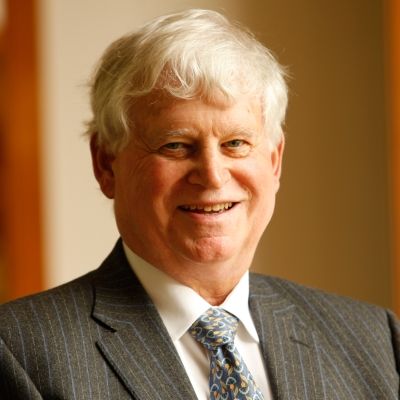
Professor John Duffy, director of the Intellectual Property Program, describes the school’s offerings in the field. This session was part of UVA Law’s 2022 Admitted Students Open House.
This Essay expounds on the outsized role of private law in governing ownership of new technologies and data. As scholars lament gaps between law and...
As the knowledge economy expanded and concerns about trade secret misappropriation mounted in the digital age, federal policymakers undertook efforts...
This Article analyzes the extraterritorial provision in the Defend Trade Secrets Act (DTSA) and considers the arguments on both sides of the question...
This Essay expounds on the outsized role of private law in governing ownership of new technologies and data. As scholars lament gaps between law and...
As the knowledge economy expanded and concerns about trade secret misappropriation mounted in the digital age, federal policymakers undertook efforts...
This Article analyzes the extraterritorial provision in the Defend Trade Secrets Act (DTSA) and considers the arguments on both sides of the question...
How should we allocate property rights in unowned tangible and intangible resources? This Article develops a model of original acquisition that draws...
As we enter the second year post enactment of the federal Defend Trade Secrets Act, this Paper presents a snapshot of developments to assess whether...
Implantable medical devices measure and record data about the physiological development in a patient’s body, and communicate the data wirelessly to a...
This study is the first to conduct an in-depth empirical analysis of damages in trade secret cases in the U.S. From an original data set of cases in...
Technology has facilitated both the amount of trade secrets that are now stored electronically, and the rise of cyber intrusions. Together, this has...
For more than a century, the commercial law of intellectual property has generated intense controversy with ever-growing stakes. The central fulcrum...
When a foreign individual or company misappropriates the trade secrets of an American company, and the acts of misappropriation occur entirely outside...
In today’s marketplace, companies from Disney to Hooters are increasingly integrating their image into the service that they provide. This has come to...
In tort law, the doctrine of contributory negligence captures conduct by the plaintiff which falls below the standard to which he should conform for...
Trade secret misappropriation litigation is often criticized for its negative effects on competition and speech. In particular, some accuse plaintiff...
All have thus far considered the Constitutional Convention’s record on intellectual property puzzling and uninformatively short. This Article revisits...
The following is a list of courses offered during 2024-26. Numbers in parentheses indicate which academic year(s) the courses were offered, i.e., 2023-24 is coded (24), 2024-25 is coded (25) and 2025-26 is coded (26). (SC) stands for short course and (YR) stands for yearlong.
Advanced Topics in Trade Secret Law (SC) (26) AI and IP (25) Antitrust in the Digital Economy (SC) (24) Art Law (SC) (24,25) Biotechnology and the Law (25) Computer Crime Law (24,25) Copyright Law (24,25,26) Emerging Growth Companies and Venture Capital Financing: Principles and Practice (24) Intellectual Property Transactions and Contract Drafting (SC) (26) Law and Artificial Intelligence (25) Law and Technology Colloquium (24) Law of Artificial Intelligence (SC) (24) Music Law: Analytical and Client Management Skills (SC) (24) Patent Law (24,25,26) Survey of Patent, Copyright, Trademark (24,26) Trade Secret Law (24,25,26) Trademark Law (24,25,26) Transactional Intellectual Property Law (25)
Facial recognition technology is used for everything from unlocking your phone to locking up criminals. UVA Law professor Elizabeth Rowe makes the case that biometric data like your face and fingerprints should have trade secret-level protections.
Being a good intellectual property lawyer requires adaptability in a dynamic field and an understanding of the realities of producing intellectual works.
Run in conjunction with the University of Virginia Licensing & Ventures Group, two patent clinics offer hands-on experience as students learn how and when to file patents and draft licensing agreements, deal with clients in the science and technology fields, and research and write about cutting-edge patent topics.
The first clinic involves practical training in patent drafting as well as the negotiation and drafting of patent and software license agreements. Students are assigned to one or more significant drafting and counseling projects and work in the office of the UVA Licensing & Ventures Group one day per week. Clinic participants may evaluate inventions and computer software for patentability and commercial value; counsel UVA faculty inventors regarding patentability, inventorship and the patenting process; prepare, file and prosecute provisional U.S. patent applications; and deal with patent examiners and research current issues in the fields of intellectual property and technology transfer. In a second clinic, the student may work exclusively with patent attorneys drafting, filing and prosecuting patent applications. Alternatively, the student may choose to work exclusively with licensing agents to draft license agreements, negotiate terms and conditions, and prepare confidentiality agreements and marketing documents.
Recent projects include:
A patent application for a class of metals capable of recovering their original shape and thickness after impact or crushing
Converting a provisional patent application on technology designed by a pharmacology professor that may halt the spread of cancerous cells
A brief on pharmaceutical patents in developing countries
A patent application for a battery-operated, handheld imaging device that promises to perform better than most ultrasound instruments
Prior art search and a draft patent application for a novel seatbelt-control system
Prior art review, market research and marketing for a neuro-stimulation technique for the treatment of epilepsy
Entrepreneurial Law Clinic
The Entrepreneurial Law Clinic involves instruction and practical training on advising startup companies and drafting basic corporate documentation. As part of the clinic, students work with entrepreneurs who are starting new companies in the University of Virginia community and Charlottesville area.
New research from Professor Elizabeth Rowe and third-year student Harrison Kearby of the University of Virginia School of Law explores how trade secrecy affects the Department of Defense’s ability to repair their equipment quickly.
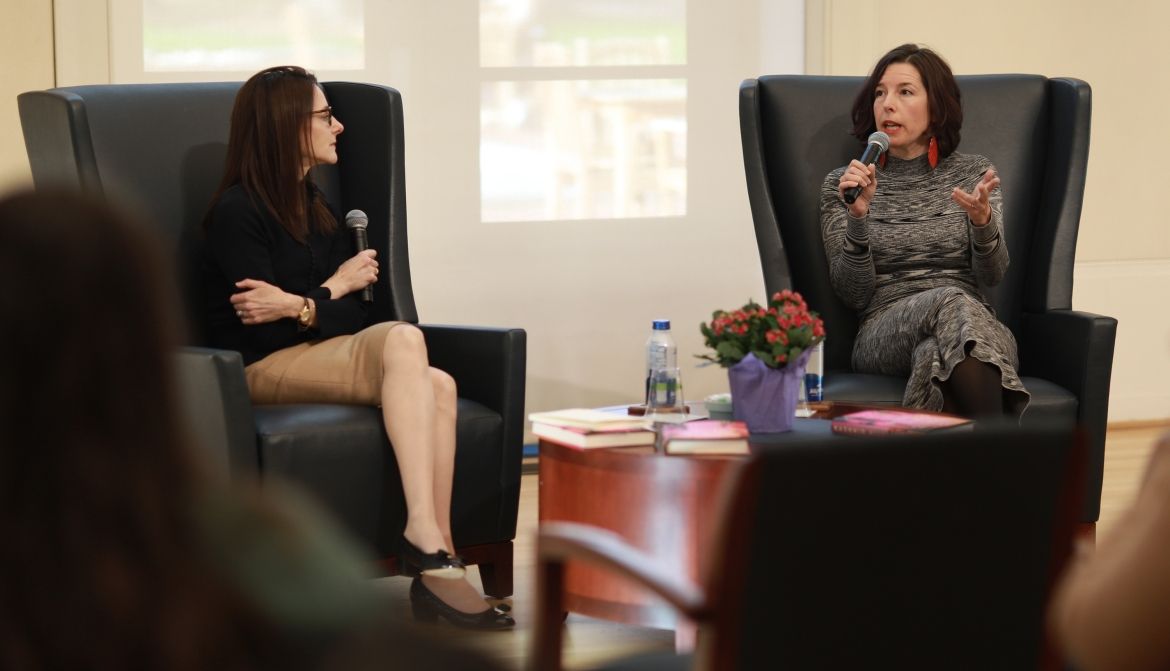
Kashmir Hill discusses her 2023 book, “Your Face Belongs to Us: A Secretive Startup’s Quest to End Privacy as We Know It," with UVA Law professor Danielle Citron during a LawTech Center talk, following an introduction by Professor Elizabeth Rowe. The book explores how facial recognition technology threatens privacy.
LIST focuses on the novel legal, policy and business problems caused by the proliferation of emerging technologies, through speakers and other activities. The group also educates students and prepares them with practical skills; connects them with a network of mentors, experts and resources; and collaborates with the policy, business and technology communities. A recent networking event featured prominent attorneys from firms, U.S. attorneys’ offices, the Justice Department, the FBI and various public interest groups like the American Civil Liberties Union. More
Patent Law Society for Litigators, Agents and Prosecutors
The Patent Law Society for Litigators, Agents and Prosecutors (Patent Law SLAPs) provides a community for students interested in all things patent law. The organization covers all aspects of patent law, from the initial prosecution of a patent up through defending and asserting it in litigation. Through peer mentorship, faculty talks and industry guests, Patent Law SLAPs connects its students with career opportunities after graduation. The organization was founded in 2023 to meet the demand for patent-focused opportunities for UVA Law students. More
Virginia Journal of Law & Technology (VJOLT)
Virginia Law's only e-journal, VJOLT provides a forum for students, professors and practitioners to discuss emerging issues at the intersection of law and technology. Recent issues have included articles on biotechnology, telecommunications, e-commerce, internet privacy and encryption. VJOLT publishes full-text articles directly to the Web. More
Virginia Law Emerging Companies and Venture Capital Society
ECVC is dedicated to supporting entrepreneurial initiatives across Grounds, connecting law students with students from other schools, and serving as a hub for those interested in entrepreneurship and entrepreneurial law. More
Other Organizations
The Virginia Law and Business Society explores the nexus between the worlds of law and business and sometimes features speakers on intellectual property topics. The JD/MBA Society serves as a focal point for communication between J.D. and MBA students and sponsors events and activities that promote interaction among the Law and Business School communities.
University of Virginia School of Law professor Elizabeth Rowe discusses “right to repair” efforts to rein in manufacturers’ intellectual property claims.
UVA Law lecturer Chris Hockett, a recently retired partner in Davis Polk’s Northern California office and global head of the firm’s antitrust practice, discusses antitrust investigations faced by big tech companies.
Kolleen Gladden-Sorensen ’21, Jennifer Carl Brickfield ’16, Tim Cook ’11 and Shannon Pierce ’01 share what they’ve been up to since graduating from the University of Virginia School of Law.
University of Virginia School of Law professor Elizabeth Rowe discusses “right to repair” efforts to rein in manufacturers’ intellectual property claims.
New research from Professor Elizabeth Rowe and third-year student Harrison Kearby of the University of Virginia School of Law explores how trade secrecy affects the Department of Defense’s ability to repair their equipment quickly.
Professor John Duffy was appointed to the U.S. Patent and Trademark Office’s Patent Public Advisory Committee, among other recent achievements and accolades for members of the University of Virginia School of Law community.
Jason Tien, a first-year student at the University of Virginia School of Law, will transition into a new profession after years as a molecular neuroscientist.
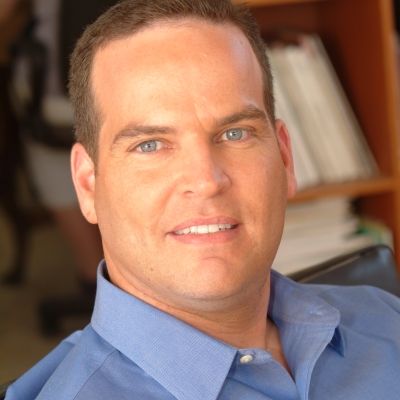
University of California, Irvine School of Law professor Ari Waldman challenges what he calls the “over-prioritization of technology expertise in technology policymaking.” UVA Law professor Danielle Citron introduces Waldman and serves as moderator. The event was sponsored by the LawTech Center.
Kashmir Hill discusses her 2023 book, “Your Face Belongs to Us: A Secretive Startup’s Quest to End Privacy as We Know It," with UVA Law professor Danielle Citron during a LawTech Center talk, following an introduction by Professor Elizabeth Rowe. The book explores how facial recognition technology threatens privacy.
Facial recognition technology is used for everything from unlocking your phone to locking up criminals. UVA Law professor Elizabeth Rowe makes the case that biometric data like your face and fingerprints should have trade secret-level protections.
Professor John Duffy, director of the Intellectual Property Program, describes the school’s offerings in the field. This session was part of UVA Law’s 2022 Admitted Students Open House.
UVA Law lecturer Chris Hockett, a recently retired partner in Davis Polk’s Northern California office and global head of the firm’s antitrust practice, discusses antitrust investigations faced by big tech companies.
University of Virginia School of Law students Mathéo Daniel René Le Goff LL.M. ’25, Jennifer Litchfield ’25 and Rohit Raguram ’25 finished as the top U.S. team and the second-best new team at the Oxford International Intellectual Property Law Moot.
The Intellectual Property Law Society, LIST and NSLF are co-hosting a Law Firm Mix and Mingle for 1Ls interested in law and technology careers. Attorneys from multiple firms will be attending, representing IP, national security and technology law practices.
This event is sponsored by a student organization.
Neel Chatterjee is an internationally recognized technology litigator and trial lawyer who co-leads King & Spalding’s technology industry practice. Coffee and pastries will be provided.
This symposium is aimed at addressing critical gaps in legal scholarship surrounding intellectual property rights in government contracting. “As government dependence on private contractors for technology increases across all areas, including national defense, fundamental unanswered legal questions require rigorous, balanced and systematic examination,” says symposium organizer Professor Elizabeth Rowe. “For the first time, this symposium assembles distinguished legal academics and military acquisition experts to actively engage in robust analysis and discussion of the role of intellectual property law in these complex challenges. This groundbreaking symposium will begin critical conversations, fill knowledge gaps in the literature, inspire reasoned policy reform, and inform the broader public discourse on government contracting and transparency.” The symposium will open with a conversation about government acquisitions featuring former Navy Secretary Carlos Del Toro and former Air Force Secretary Frank Kendall. Symposium papers are available at VJOLT.org.
This event is open to the UVA community and members of the Judge Advocate General’s Legal Center and School. The event is free, but registration is required (lunch is available to those who register by April 10).
Coke Stewart ’97, deputy under secretary of commerce for intellectual property and deputy director of the U.S. Patent and Trademark Office, will discuss emerging issues in the IP field and the work of USPTO. Most recently, Stewart served as acting under secretary of commerce for intellectual property and acting director of the USPTO, where she led one of the largest IP offices in the world — almost a $5 billion operation with over 14,000 employees located across the 50 states and Puerto Rico. Pizza and salad will be provided. This event is open to the Law School community only.
University of California, Irvine School of Law professor Ari Waldman challenges what he calls the “over-prioritization of technology expertise in technology policymaking.” UVA Law professor Danielle Citron introduces Waldman and serves as moderator. The event was sponsored by the LawTech Center.