Lawyers working with public institutions must understand the complex relationship between law and public policy to be effective at shaping it. UVA Law School's strength in public policy and regulation law draws from faculty members who have brought their experiences working for the government or other institutions back to the classroom. These connections benefit students in a variety of ways. When professors work for Congress or federal agencies such as the State Department, volunteer for government commissions, consult for state and local governments, or work with advocacy organizations that seek to influence public policy, the experiences enrich their teaching, give students an opportunity to network with practicing attorneys in a variety of fields, and inspire fresh insights in research and scholarship.
Connections With D.C.
The Law School's proximity to Washington, D.C., provides rich opportunities for a close-up view of how regulations, policies and the government interact. The location also allows top government lawyers and Washington-based practitioners to teach part-time at Virginia, which exposes students to the kinds of concrete issues they may one day face as government officials, practicing lawyers or policy advocates.
Alumni Network
Virginia's alumni also connect the school and students to Washington and other public policy networks. The Law School’s graduates work for the White House, the Justice Department, Congress, the military and numerous federal agencies.
Few constitutional issues have been as significant to the first 100 days of the second Trump Administration as the question whether the President may...
We are living in a dangerous inverted world. Abusers claim the mantle of victimhood while pummeling their victims with abuse. Would-be authoritarians...
Universities are facing an unprecedented wave of claims that they have violated their obligations to Jewish students under Title VI of the 1964 Civil...
Few constitutional issues have been as significant to the first 100 days of the second Trump Administration as the question whether the President may...
We are living in a dangerous inverted world. Abusers claim the mantle of victimhood while pummeling their victims with abuse. Would-be authoritarians...
Universities are facing an unprecedented wave of claims that they have violated their obligations to Jewish students under Title VI of the 1964 Civil...
There is a live debate going on over whether antitrust should take a broader view of the economics of market concentration. When antitrust reformers...
We propose the creation of a Prosecutor Jury—a mechanism designed to balance the need to hold politicians accountable for their crimes, and the need...
In 2021 the Uniform Law Commission (ULC) gave final approval to the Uniform Cohabitants' Economic Remedies Act (UCERA). The Act provides a framework...
Chevron U.S.A. Inc. v. Natural Resource Defense Council, Inc. is frequently discussed in general terms without sufficient attention to the specifics...
The question whether the term “set aside” in the Administrative Procedure Act (APA) authorizes a federal court to vacate a rule universally—as opposed...
Citation counts are a common quantitative metric used by researchers and analysts to assess scholarly output. When U.S. News & World Report announced...
For far too long, the federal government has failed to exercise its constitutional authority to mitigate the harms imposed by local policing. Absent...
In the United States, cost-benefit analysis plays a substantial role in government policy making in traditional regulatory areas, such as automobile...
As this Essay shows, the fertility discourse of the last half century deals with the profound effects that come from the transformation of the economy...
In the period immediately preceding the Constitution’s adoption, New Yorkers engaged in a spirited debate over whether a proposed delegation from the...
Governments regulate private conduct. They also exercise rights of ownership and contract that are like those of private people. From the founding to...
A number of technological and political forces have transformed the once staid and insider dominated notice-and-comment process into a forum for large...
Distinguished Fellow, Karsh Center for Law and Democracy
Lecturer
Courses and Seminars
The following is a list of courses offered during 2023-24. Numbers in parentheses indicate the academic year(s) courses were offered: 2023-24 is coded (24), 2024-25 is coded (25) and 2025-26 is coded (26). (SC) stands for short course and (YR) stands for yearlong.
Administrative Law (24,25,26) Advanced Crimes and Defenses (JAG) (SC) (24,25) Advanced Topics in Law and Public Service (24,25,26) Advanced Topics in Professional Responsibility (JAG) (SC) (24,25) Advanced Topics in the Law of Armed Conflict (JAG) (SC) (24) Advancing the Commitment to Public Service Through Law Firm Pro Bono (SC) (24,25) AI and the Law (SC) (24) Animal Law (24) Antitrust (24,25,26) Antitrust in the Digital Economy (SC) (24) Antitrust Review of Mergers in a Global Environment (24,25) Artificial Intelligence and Democracy (25) Banking and Financial Institutions (24,25,26) Baseball (SC) (24,25) Bioethics and Law Internship Seminar: Health Policy and Administration (24,25,26) Bioethics and the Law Seminar (24,25,26) Biotechnology and the Law (25) Blood Feud (SC) (24,25,26) Border Policy and Politics (24,25) Cannabis Legalization (SC) (24) Children and the Law (24,25,26) Citizenship: The Law, History and Politics of U.S. Citizenship (26) Civil Rights Litigation (24,25,26) Climate and Debt (24) Climate Law and Climate Ethics (24) Congress, Oversight and the Separation of Powers (SC) (24) Constitutional Law and Economics (24,26) Consumer Financial Protection Seminar (26) Contemporary Challenges in Military Justice (SC) (24) Contemporary Housing Policy Debates (25) Corporate Social Responsibility Seminar (25,26) Crimmigration Law: Law and Policy at the Intersection of Immigration Law and Criminal Justice (24) Critical Analysis of the Military Justice System (JAG) (SC) (24,25) Critical Race Theory and Criminal Justice (25) Cryptocurrency Law and Policy (SC) (24) Cybersecurity and Privacy Boot Camp (SC) (25) Cybersecurity Law and Policy (24) Designing Democracy: Representation (24) Digital Evidence from Theory to Practice (JAG) (SC) (24,25) Economic Statecraft and Public International Law (SC) (25) Education Inside U.S. Prisons Seminar (24,25,26) Emerging AI Legal Issues (SC) (25) Employee Benefits Law (25) Employment Law: Contracts, Torts and Statutes (24,25,26) Employment Law: Health and Safety (24,25) Employment Law: Wage and Hour Regulation (26) Energy Regulation and Policy (24,26) Environmental Law (24,25,26) European Union Law (SC) (24) Federal Income Tax (24,25,26) Feminism and the Free Market (24) Food and Drug Law (24,26) Genetics and the Law (SC) (24,25) Geopolitics, Law and the World Economy (25) Government Contract Law (24,25,26) Government Secrecy (24) Health Care Marketplace: Competition, Regulation and Reform (SC) (25) History and Evolution of Victims’ Rights (JAG) (SC) (24,25) Housing Law and Poverty Seminar (24,25,26) Immigration Law and Policy (24,25,26) Innovating for Defense (24,26) International Human Rights Law (24,25,26) International Settlement of Disputes: Methods and Forums (SC) (25) International Trade Law and Policy (24,25) Introduction to Legal Aspects of Cyberspace Operations (JAG) (SC) (24,25) Investigating Presidents (SC) (26) Land Use Law (25) Law and Artificial Intelligence (25) Law and Economics (24,25,26) Law and Economics Workshop (25,26) Law and Inequality Colloquium (24,25) Law and Leadership in the Public Interest (24,25) Law and Public Service (24,25,26) Law and Riots (24,25,26) Law and Technology Colloquium (24) Law of Artificial Intelligence (SC) (24) Law of Sea, Air and Space Operations (JAG) (SC) (24,25) Law of the Police I: Rules, Rights and Regulation (25) Law Reform and Impact Litigation Seminar (24,25,26) Law, Inequality and Education Reform (25) Legislation (24,26) Legislation and Regulation (25,26) Legislative Drafting and Public Policy (24) Litigating the 2024 Presidential Election (25) Litigating the Unitary Executive (26) Litigation Skills and Professional Liability Law (24,25,26) Monetary Constitution Seminar (24,25,26) Monument Litigation (SC) (25) National Security Law Proseminar I (JAG) (SC) (24,25) National Security Law Proseminar II (JAG) (SC) (24,25) Native American Law (24) Natural Resources Law and Policy (25) New Research in Criminal Justice (25) Online Privacy, Freedom of Speech and Platform Regulation in Europe (SC) (26) Pain and the Law (25,26) Poverty Law and the Lawyer’s Role (24) Practical Perspectives on Policing: Fair and Effective Policymaking by Law Enforcement (SC) (24) Privacy (24,25,26) Privacy Law and Theory Seminar (24,25,26) Privacy Torts (24,25) Property, the Police Power and Emergencies (24,25) Public Law Colloquium (25,26) Public Utility Regulation Seminar (25) Race, Meritocracy and Justice on Campus (SC) (25) Regulation of Political Advocacy Seminar (24,25,26) Regulation of the Political Process (25,26) Regulatory Law and Policy (25) Religious Freedom and Reproductive Rights (24) Reparations: Identity, Law and Politics (25) Reproductive Ethics and Law (SC) (24,25,26) Reproductive Rights and Justice (SC) (25) Rethinking Criminal Justice (26) Rights of the Accused (JAG) (SC) (24,25) Rules (24,25,26) Second Amendment and Gun Violence Colloquium (25) Securities Regulation (24,25,26) Securities Regulation (Law & Business) (24,25,26) Shifting Priorities in Humanitarian Immigration (26) Single People and the Law (25) Special Topics in Client Services (JAG) (SC) (24,25) Stakeholderism and Business Law (SC) (24) State and Local Government Law (24) State Attorneys General (24,25,26) State Constitutional Law: Litigation and Adjudication (26) Taboo Trades (24,25,26) Tax Policy in an Era of Globalization (SC) (26) Telecommunications Law and Policy Seminar (26) Ten-Year Checkup of the Affordable Care Act (24) The Business of Banking and Prudential Regulation (SC) (24,25) The Business of Sport (26) The Evolving AI Governance Landscape (SC) (26) The Executive Branch: Comparative and Political Aspects (SC) (24) The January 6th Investigation and How Courts Can Shape Congress’ Power to Investigate (SC) (24) The Mueller Report and the Role of the Special Counsel (SC) (24,25) The Right to Protest (SC) (25,26) Theory and Practice of Biodiversity Conservation (25,26) Topics in Banking and Financial Regulation (24) Transgender History, Recognition, Regulation and Rights (26) Urban Law and Policy (24,26) U.S. Refugee and Asylum Law Seminar (25,26) Veteran Benefits and Retirement Planning (JAG) (SC) (24,25) Veterans Law (26) War Crimes and Atrocity Law (JAG) (SC) (24) Water Law and Policy (26)
Jamieson Greer ’07, the U.S. trade representative, discussed the current state of tariffs on Tuesday as part of the Virginia Journal of International Law’s 75th annual International Law Symposium at the University of Virginia School of Law.
UVA Law alumna Tahesha L. Way ’96 speaks about her career path to the roles of New Jersey lieutenant governor and secretary of state, offers advice to current law students, and stresses the importance of voting in every election.
Community Organization and Social Enterprise Clinic I and II
This clinic prioritizes work that advances equity and/or supports members of marginalized communities, particularly in the Central and Southwest Virginia area.
Students in this semester-long clinic have the opportunity to work on real-world environmental problems in a variety of venues — legal advocacy before courts, expert testimony before administrative agencies and coalition building directly with the communities impacted by environmental harm.
Students in this yearlong clinic advise and work directly with local nonprofit boards on a “legal health checkup” and other matters such as initial formation, establishing tax-exempt status, charitable solicitation, state/local taxation issues, contracts and continuing legal compliance.
The Law School's externships program allows students to earn a semester of credit while working full-time for nonprofit or government employers anywhere in the world, and students also can work part-time for credit closer to home. Third-year law student Annalise Lisson had a full-time externship working in the major crimes division of the U.S. Attorney's Office of the Northern District of Georgia. "I was able to take on long-term projects and fully participate in a two-week trial," Lisson said. "About half of my work related to sex and labor trafficking investigations, and I spent the other half of my time on a marriage fraud case." More
Students in the State and Local Government Policy Clinic at the University of Virginia School of Law worked with Virginia lawmakers to help shepherd bills on assistance for incarcerated pregnant women and opioid treatment, which were recently signed into law.
Two former White House officials on different sides of the political aisle, Melody Barnes and John Bridgeland ’87, talk about ways to strengthen democracy and work across differences.
Virginia’s professors have extensive experience in public policy through government posts, as consultants and as volunteers. Professors have started their careers in, or taken leave to work at, the Justice Department, the State Department, the Solicitor General’s Office, the Department of Homeland Security and more. Others have advised state officials on proper policing policies, or served on committees or commissions on intellectual property, mental health, legislative reform and national security issues. Still others have worked for NGOs and advocacy organizations focused on shaping public policy. Examples of current and past work include:
ALICE ABROKWA, senior counsel, U.S. Department of Education Office for Civil Rights; senior attorney, National Center for Youth Law; trial attorney, Disability Rights Section, U.S. Department of Justice Civil Rights Division.
ADITYA BAMZAI, member, Privacy and Civil Liberties Oversight Board; attorney-adviser, Justice Department Office of Legal Counsel
ASHLEY DEEKS, White House associate counsel and deputy legal adviser to the National Security Council; assistant legal adviser for political-military affairs, State Department Office of the Legal Adviser; legal adviser, U.S. Embassy in Baghdad
MICHAEL DORAN, attorney advisor and acting deputy benefits tax counsel in the Office of Tax Policy at the U.S. Treasury Department
JOHN DUFFY, member, Administrative Conference of the United States; attorney-adviser, Justice Department
AMANDA FROST, staff attorney, Public Citizen; worked for the Senate Judiciary Committee
ALISON GOCKE, legal fellow, Natural Resources Defense Council
RACHEL HARMON, senior policy advisor for criminal justice, Domestic Policy Council; trial attorney, Justice Department, Civil Rights Division, Criminal Section
JOHN C. HARRISON, counselor on international law, State Department; deputy assistant attorney general, Justice Department Office of Legal Counsel
EDWIN HU, senior economic policymaker, White House National Economic Council; chief economist, SEC Commissioner Robert J. Jackson Jr.
CALE JAFFE, director, Virginia office, Southern Environmental Law Center
MICHAEL LIVERMORE, member, Administrative Conference of the United States; executive director, Institute for Policy Integrity
PAUL G. MAHONEY, member, Securities and Exchange Commission Investor Advisory Committee
THOMAS NACHBAR, judge advocate, U.S. Army Reserve; senior adviser, Department of Defense, Office of Rule of Law and Detainee Policy; member, Communications Security, Reliability and Interoperability Council
A. SPRIGHTLEY RYAN, inspector general, Smithsonian Institution; trial attorney, Environmental Crimes Section of the Justice Department
MOLLY BISHOP SHADEL, attorney-adviser, Justice Department Office of Intelligence Policy and Review
PAUL B. STEPHAN ’77, counselor on international law, State Department; consultant to Treasury Department and World Bank; consultant to the International Monetary Fund and the Organisation for Economic Co-Operation and Development
LEON SZEPTYCKI, general counsel, Trout Unlimited; associate director, UVA Environmental Institute
University of Virginia School of Law professor Danielle Citron and Jeff Stautberg ’25 penned a research paper delving into the recent Murthy v. Missouri litigation, which is affecting information-sharing between social media companies and the government.
University of California, Irvine School of Law professor Ari Waldman challenges what he calls the “over-prioritization of technology expertise in technology policymaking.” UVA Law professor Danielle Citron introduces Waldman and serves as moderator. The event was sponsored by the LawTech Center.
Professor John Duffy of the University of Virginia School of Law has been appointed general counsel and acting solicitor of the U.S. Patent and Trademark Office.
University of Virginia School of Law professor Danielle Citron examines Meta’s $17 billion settlement over claims that the company deliberately designed products to be addictive to children.
University of Virginia School of Law professors Andrew Block and Richard Schragger have been named among the Karsh Institute of Democracy’s new Faculty Fellows.
The Education Rights Institute at the University of Virginia School of Law has been awarded a $200,000 grant from the W.K. Kellogg Foundation, support that will help the institute expand its work to ensure all students have access to a high-quality education.
Professor Megan Stevenson of the University of Virginia School of Law explores the origins of risk assessment tools in a new co-authored paper, highlighting the role that eugenic criminology played in their inception and early years.
Abigail Dillen, president of Earthjustice, speaks with moderator Professor Cale Jaffe ’01 as part of the Lillian K. Stone Distinguished Lecture in Environmental Policy. Dean Leslie Kendrick ’06 gives introductory remarks.
Students in UVA Law's Environmental Law and Community Engagement Clinic represent environmental nonprofits, citizens’ groups and other community organizations seeking to protect and restore the environment of Virginia and other parts of the country.
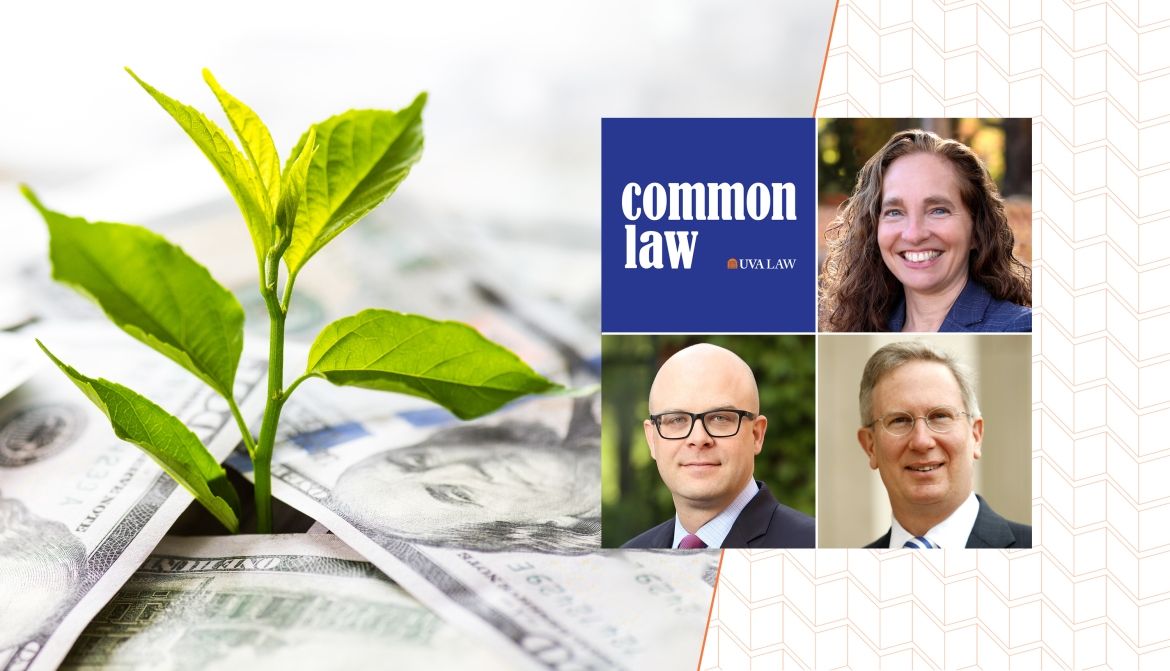
The practice of investing in funds and companies that pay attention to environmental, social and corporate governance issues could be at a turning point, say UVA Law professors Quinn Curtis and Paul G. Mahoney.
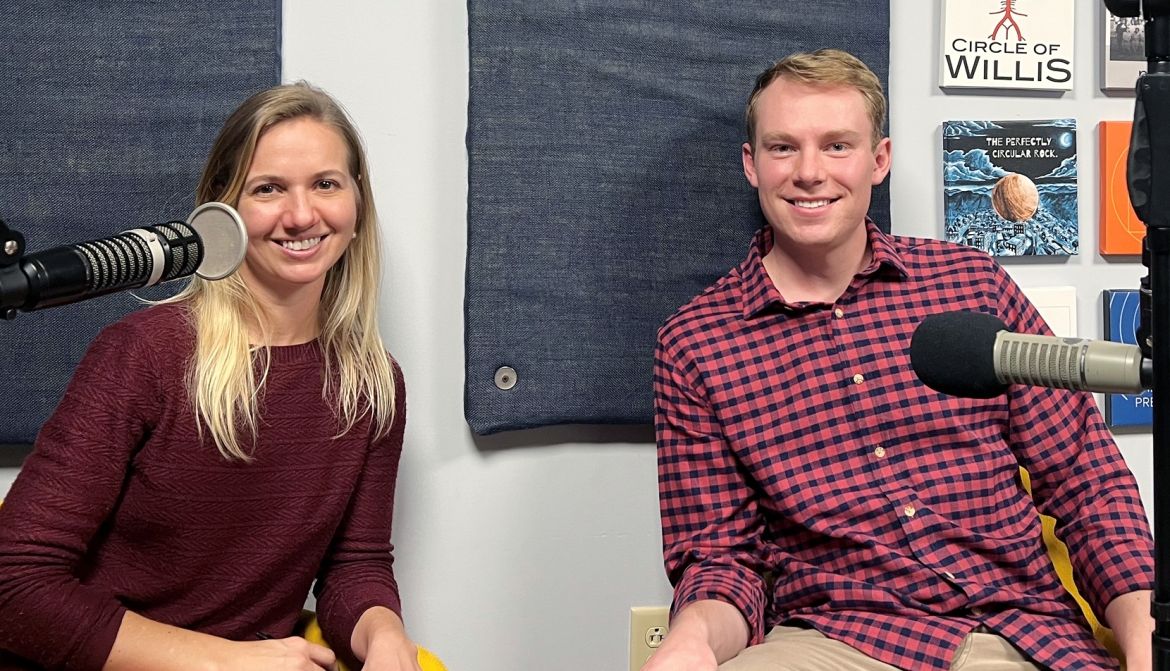
Third-year law students Casey Crowley and Elizabeth Putfark join Dean Blazer ’08 to discuss the many ways law students take advantage of UVA’s location in scenic Charlottesville, Virginia. Putfark, who will join the Southern Environmental Law Center as an associate attorney this fall, shares how UVA Law’s environmental law clinic, curriculum, faculty, and student organizations nurtured her legal education and set her on the path to success.
A University of Virginia School of Law class recently explored a hypothetical debt crisis and the legal approaches the U.S. government might use to address it.
Na’ilah Suad Nasir, president of the Spencer Foundation, delivers the keynote address at the launch of the Education Rights Institute, “Toward a High-Quality Education for All Students: Contemporary Questions for Law and Policy.” Dean Risa Goluboff, UVA President Jim Ryan ’92 and Education Rights Institute inaugural director Professor Kimberly Jenkins Robinson also deliver remarks.
The Miller Center’s Health Care Policy Project will host a panel to examine which strategies are most likely to strengthen the U.S. Centers for Disease Control and Prevention, what a reconstituted agency may look like, why leadership matters and how trust and confidence can be rebuilt. Professor Margaret Foster Riley will moderate.
Join PLACE for a conversation with Laura V. Swett, chairman of the Federal Energy Regulatory Commission. Swett will discuss how the nation’s premier federal energy regulator thinks about the most pressing problems in the field of energy law today, including affordability, data centers and grid modernization. Professor Alison Gocke will moderate. Food will be served first-come, first-served beginning at 11:30 a.m.
Join ACS, LALO, ILS and Professor Amanda Frost for a discussion of the Supreme Court’s recent immigration decisions, including Trump v. Barbara, Mullin v. Doe and Mullin v. Al Otro Lado. Food will be provided.
This event is sponsored by a student organization.
The Orientation to C'ville series is open to everyone but is particularly designed to provide context for students who are doing (or plan to do) clinical or pro bono work in the community. Attendance is required for some clinic students. The Part 3 event features a panel discussion with community organizers discussing their work as it pertains to immigration advocacy and legal services in Charlottesville.
Lecturer Elizabeth Schmelzel, director of the school’s Immigration Law Clinic, will moderate a discussion with Boris Ozuna, a community organizer with the Legal Aid Justice Center, and Javier Raudales, executive director of Sin Barreras/Without Barriers. Snacks will be provided.
Law and policy at the intersection of voting rights and race is rapidly changing with recent U.S. Supreme Court decisions and executive actions. This event brings together leading national and local voting rights experts who are navigating this changing landscape. Learn about how American democracy is engaging with issues of race and national origin for the 2026 election. A panel of experts will kick off the event at 10 a.m., followed by a keynote talk at noon delivered by Spencer Overton, the Patricia Roberts Harris Research Professor of Law at George Washington University Law School. Box lunches will be provided on a first-come, first-served basis beginning at 11:45 a.m.
The Virginia Environmental Law Forum welcomes Tom Kenney ’86 to speak with students about his long career with the Environmental Protection Agency’s Office of Regional Counsel, Region 5 in Chicago. Food will be provided.
This event is sponsored by a student organization.
Join the UVA Center for Politics for an evening conversation moderated by Professor A. Sprightly Ryan, former inspector general for the Smithsonian. She will be joined by Glenn Fine, former inspector general for the U.S. Department of Justice; Paul Martin, former inspector general for NASA and USAID; and Michael Missal, former inspector general for the U.S. Department of Veterans Affairs. Together, they will discuss the role of inspectors general and the challenges facing these positions in today’s political environment.
Visiting professor Ilya Somin will debate Jeff Clark, former assistant attorney general for the Justice Department’s Environment and Natural Resources Division and former acting assistant attorney general for the Civil Division, on the proper scope of U.S. immigration policy.
This event is sponsored by a student organization.
How much of our daily life is shaped by federal regulation — and how much should be? Former U.S. Secretary of Labor Eugene Scalia joins the Federalist Society to make the case for smaller, more accountable government. Drawing on his experience in private practice and public service, Scalia will trace the growth of the modern administrative state, explain how regulation affects everything from jobs to innovation and argue for restoring constitutional limits on executive power. Food will be provided.
This event is sponsored by a student organization.
Recent events have raised questions about the reach of presidential powers through executive orders. Can an executive order end birthright citizenship despite longstanding Supreme Court precedent supporting it? Can a president abolish an independent agency? Is the work of the Department of Government Efficiency, which has targeted federal programs and jobs for elimination, constitutional? To provide an opportunity for students and faculty to discuss these issues, the Karsh Center will host a series of three lunchtime sessions. This event, featuring Professors Payvand Ahdout and Saikrishna Prakash, is the third in the series. Lunch will be provided on a first-come, first-served basis.
Recent events have raised questions about the reach of presidential powers through executive orders. Can an executive order end birthright citizenship despite longstanding Supreme Court precedent supporting it? Can a president abolish an independent agency? Is the work of the Department of Government Efficiency, which has targeted federal programs and jobs for elimination, constitutional? To provide an opportunity for students and faculty to discuss these issues, the Karsh Center will host a series of three lunchtime sessions. This event, featuring Professors John C. Harrison and Daniel R. Ortiz, is the second in the series. Lunch will be provided on a first-come, first-served basis.
Recent events have raised questions about the reach of presidential powers through executive orders. Can an executive order end birthright citizenship despite longstanding Supreme Court precedent supporting it? Can a president abolish an independent agency? Is the work of the Department of Government Efficiency, which has targeted federal programs and jobs for elimination, constitutional? To provide an opportunity for students and faculty to discuss these issues, the Karsh Center will host a series of three lunchtime sessions. This event, featuring Professors Aditya Bamzai and Amanda Frost, is the first in the series. Lunch will be provided on a first-come, first-served basis.
Jonathan Wolfson, chief legal officer and policy director at the Cicero Institute, joins the Federalist Society to discuss “Washington Is Broken, But State Governments Can Still Work: Why State-Focused Policy Reform Matters More Than Ever.” Professor Andrew Block will provide commentary.
Sharon Fast Gustafson, former general counsel of the Equal Employment Opportunity Commission, and Christine Lambrou Johnson, head of Virginia’s Office of Civil Rights, will discuss how state and federal agencies fight discrimination and challenges and opportunities facing their offices. Food will be provided.
Abigail Dillen, president of Earthjustice, speaks with moderator Professor Cale Jaffe ’01 as part of the Lillian K. Stone Distinguished Lecture in Environmental Policy. Dean Leslie Kendrick ’06 gives introductory remarks.