

About
The John M. Olin Program in Law and Economics at UVA Law School supports faculty and student interests and research relating to the economic analysis of legal issues. The program stimulates discussions and debate through conferences, workshops and lectures. It encourages student research through colloquia.
The John M. Olin Foundation Inc. was established in 1953 by John Merrill Olin (1892-1982) — inventor, industrialist, conservationist and philanthropist. Olin was committed to the preservation of the principles of political and economic liberty as they have been expressed in American thought, institutions and practice.
Latest Research
More
More
More
More
More
More
Income inequality is a national preoccupation, and the public’s imagination is captured by the astronomical incomes of Valley tech billionaires and...
The global economy owes more than $100 trillion in reparations for slavery, but states have persistently deferred payment. Meanwhile, the OECD’s...
We introduce altruism into standard models of bargaining and explore its implications for the Coase Theorem. A strict interpretation of the Coase...
Scott Baker
We examine the design of lawmaking institutions when advocates have agenda setting power and there is randomness in the status quo laws eligible for...
Psychology and law, by their nature, are deeply entwined. Both are about human behavior – understanding it, modifying it, regulating it. Psychology’s...
Extraordinary times beget extraordinary measures. Multiple national emergencies during the past quarter century have generated a pitched debate as to...
Faculty Director(s)
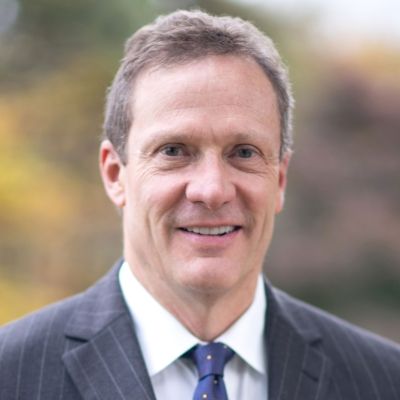
Jason S. Johnston
Blaine T. Phillips Distinguished Professor in Environmental Law
Director, John M. Olin Program in Law and Economics
Research
Income inequality is a national preoccupation, and the public’s imagination is captured by the astronomical incomes of Valley tech billionaires and...
The global economy owes more than $100 trillion in reparations for slavery, but states have persistently deferred payment. Meanwhile, the OECD’s...
We introduce altruism into standard models of bargaining and explore its implications for the Coase Theorem. A strict interpretation of the Coase...
Scott Baker
We examine the design of lawmaking institutions when advocates have agenda setting power and there is randomness in the status quo laws eligible for...
Psychology and law, by their nature, are deeply entwined. Both are about human behavior – understanding it, modifying it, regulating it. Psychology’s...
Extraordinary times beget extraordinary measures. Multiple national emergencies during the past quarter century have generated a pitched debate as to...
John Eric Humphries
Aurelie Ouss
Kamelia Stavreva
...Noncarceral conviction is a common outcome of criminal court cases: for every individual incarcerated, there are approximately three who were recently...
There is a live debate going on over whether antitrust should take a broader view of the economics of market concentration. When antitrust reformers...
Puerto Rico. Detroit. Stockton. Arkansas. Each of these places stands as a testament to the import of municipal debt crises and their capacity to...
Oren Bar-Gill
There is concern that present-biased agents incur too much debt because of its deferred costs – concern that has influenced regulation of consumer...
The history of public policy is littered with failures to solve large-scale social problems using interventions derived from behavioral science...
Aaron L. Nielson
The Supreme Court has twice held since 2020 that statutory restrictions on the President’s removal power violate Article II of the U.S. Constitution...
Charles S. Weaver
Memory issues stemming from criminal trials that involve the reliability of eyewitnesses are well-known. However, the relevance of memory to law...
Large language models (LLMs) now perform extremely well on many natural language processing tasks. Their ability to convert legal texts to data may...
Today's mass torts are headed to bankruptcy. Be it Purdue Pharma's opioids, United States of America (USA) Gymnastics' sexual abuse, Pacific Gas and...
Countries hit by unexpected crises often look to their overseas diasporas for assistance. Some countries have tapped into this generosity of their...
Thomas Frampton
Evidence law controls what information will be admissible in court and when, how, and by whom it may be presented. It shapes not only the trial...
Jennifer L. Doleac
We evaluate the impacts of adopting algorithmic risk assessments in sentencing. We find that judges changed sentencing practices in response to the...
This chapter studies political corruption and its many relationships to the law of democracy. It begins with bribery laws, which forbid officials from...
Lee C. Buchheit
Lenders are perfectly free to decide for themselves whether, when, how, to whom and on what terms they will extend credit to a sovereign borrower. But...
Yonathan A. Arbel
False information causes harm, threatening individuals, groups, and society. Many people struggle to judge the veracity of the information around them...
Many analyses of law take an unsentimental, perhaps even cynical view of regulated actors. On this view, law is a necessity borne of people’s selfish...
This article examines the impact of Greece retroactively, via legislation, changing the terms in hundreds of billions of euros worth of Greek...
The SEC mandates that public companies assess new information that changes the risks that they face and disclose these if there has been a “material”...
This paper describes the response of George Washington's administration to a plea for emergency war financing from French colonists who were trying to...
The conventional view is that standardized boilerplate terms represent an optimal contractual solution to the contracting problems facing parties in...
Tara Chowdhury
Faith Chudkowski
Amanda Gray Dixon
...Consequential damages have been a cornerstone of contract doctrine since the broken crankshaft in Hadley v. Baxendale. And the Hadley rule is one of...
Even before the pandemic, the 90,000 local governments in the United States faced grim fiscal positions. During the pandemic, revenues cratered, costs...
In this article, we examine the relations between risk, the choice of foreign or local contract terms (parameters), and maturity in the sovereign debt...
Resident Faculty
Resident Faculty

Corporate law and corporate finance

Contracts, professional responsibility, agency, partnerships and LLCs

Law and economics, courts and judging, defamation, First Amendment/free speech, immigration and refugee law

Corporations, securities and real estate law; consumer financial markets
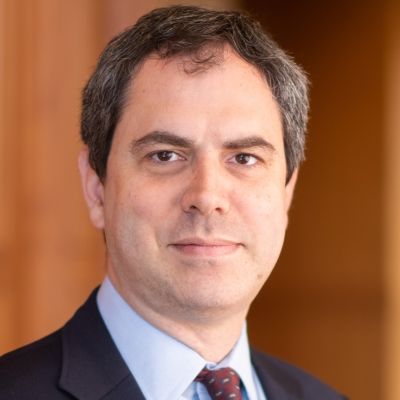
Law and economics, quantitative methods/statistics in the law

Bankruptcy
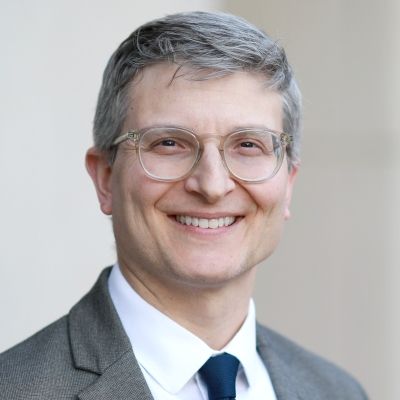
Election law, law and economics, legislation, statutory interpretation, law and democracy

Tax law and policy, behavioral economics
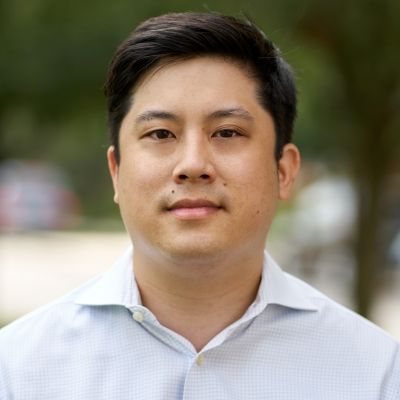
Empirical analysis of corporate and securities law and the structure of financial markets
Bankruptcy and consumer finance law
Law and economics, environmental liability
Environmental law and climate change, administrative law

Corporations, securities regulation, contracts

Civil litigation, law and psychology
Intellectual property, law and economics
Criminal law and criminal procedure
Other Faculty
Harry Franks
Lecturer
Workshops
The workshop program invites law and economics scholars from our own faculty and from other schools to deliver working drafts of their papers to the faculty and a small group of students at Virginia. Faculty and students attending are encouraged to read the paper prior to each workshop, which will be held in the Faculty Lounge on Tuesdays from 11:30 a.m.-12:50 p.m., unless otherwise indicated. After brief introductory remarks by the workshop guests, questions and discussion will follow for the remainder of the session. Lunch will be provided.
Full UVA Law Specialty Workshop Schedule
Spring 2026
Jan. 27
Roman Rivera (Georgetown University)
Feb. 10
Tamar Kricheli-Katz (Tel-Aviv University)
Feb. 24
Kevin M. Quinn (Emory University)
March 17
Albert Choi (University of Michigan)
March 31
Sarath Sanga (Yale University)
April 14
Dhruv Aggarwal (Northwestern University)
Spring 2025
Feb. 4
Edward Fox (University of Michigan)
Feb. 18
Eleanor Wilking (Cornell University)
March 4
Robert Bartlett (Stanford University)
March 25
Natasha Sarin (Yale University)
April 8
Kyle Rozema (Northwestern University)
April 22
Reilly S. Steel (Columbia University)
Spring 2024
Feb. 6
Jonathan Petkun (Duke University)
Feb. 20
Eric Talley (Columbia University)
March 12
Rebecca Goldstein (University of California, Berkeley)
March 26
Erik Hovenkamp (University of Southern California)
April 9
Talia Gillis (Columbia University)
April 23
Zhuang (John) Liu (University of Hong Kong)
Spring 2023
Feb. 7
Nuno Garoupa (George Mason University Antonin Scalia Law School)
Feb. 21
Prasad Krishnamurthy (University of California, Berkeley, School of Law)
March 14
Holger Spamann (Harvard Law School)
March 28
Jill E. Fisch (University of Pennsylvania Carey Law School)
April 11
Jacob Goldin (University of Chicago Law School)
April 25
Paige Marta Skiba (Vanderbilt University Law School)
Fall 2022
Sept. 13
Doron Teichman (Hebrew University of Jerusalem Faculty of Law)
Doron Teichman (Hebrew University of Jerusalem Faculty of Law)
Sept. 27
Adriana Robertson (University of Chicago Law School)
Oct. 18
Sepehr Shahshahani (Fordham University School of Law)
Nov. 1
Adi Leibovitch (Hebrew University of Jerusalem Faculty of Law)
Nov. 22
Florencia Marotta-Wurgler (New York University School of Law)
Dec. 6
Abhay Aneja (University of California, Berkeley, School of Law)
Spring 2022
Feb. 8
Maya Sen (Harvard)
Feb. 22
Yonathan Arbel (University of Alabama School of Law)
March 15
Philip Cook (Duke)
March 29
Jens Frankenreiter (Washington University in St. Louis School of Law)
April 12
Charles Crabtree (Dartmouth College) — Caplin Pavilion
April 26
Jonah Gelbach (UC Berkeley School of Law)
Fall 2021
Sept. 14
Adam Chilton (University of Chicago Law)
Sept. 28
Amalia R. Miller (UVA) and Melissa K. Spencer (University of Richmond)
Oct. 19
Ben Grunwald (Duke Law)
Nov. 2
Oren Bar-Gill (Harvard Law School)
Nov. 16
Weijia Rao (Antonin Scalia Law School, George Mason University)
Nov. 30
Zachary Liscow (Yale Law School)
Spring 2021
Online Via Zoom, 12:30 p.m.- 1:40 p.m.
Feb. 2
Catherine Tucker (MIT)
Feb. 16
Michael Simkovic (USC Gould School of Law) and Eric Allen (University of California, Riverside)
March 2
Netta Barak-Corren (Hebrew University of Jerusalem)
March 23
Bocar Ba (UC Irvine)
April 6
Crystal Yang (Harvard Law)
April 20
Shayak Sarkar (UC Davis)
April 27
Katerina Linos (Berkeley)
Fall 2020
Online Via Zoom, 12:30 p.m.- 1:40 p.m.
Sept. 15
Michael Frakes (Duke Law)
Sept. 29
Elliott Ash (ETH Zurich)
Oct. 20
Jeremy McClane (Illinois College of Law)
Oct. 27
Caroline Cecot (Antonin Scalia Law School, Geoge Mason University)
Nov. 10
Melissa Wasserman (University of Texas at Austin School of Law)
Nov. 24
Jennifer Doleac (Texas A&M University)
Spring 2020
Jan. 21
David Hyman (Georgetown)
Feb. 11
Tatiana Homonoff (NYU Wagner)
Feb. 25
Tamar Kricheli-Katz (Tel Aviv)
March 24
Rachel Potter (UVA)
April 7
Jordan Neyland (GMU)
Fall 2019
Sept. 17
Ashley Langer (Arizona)
Sept. 24
Lewis Kornhauser (NYU)
Oct. 29
Yair Listokin (Yale)
Nov. 12
Rory VanLoo (Boston)
Nov. 19
Cindy Alexander (SEC)
Spring 2019
Feb. 12
Jonah Gelbach (Penn)
Feb. 26
Ken Ayotte (UC Berkeley)
March 26
Claudia Landeo (Alberta)
April 9
Anne Piehl (Rutgers)
April 23
Anne Meng (UVA)
Fall 2018
Sept. 25
Keith Hylton (Boston University)
Oct. 16
Lara Buchak (UC Berkeley)
Oct. 30
Daniel Sokol (Florida)
Nov. 13
Jens Frankenreiter (Max Planck Institute)
Nov. 27
Abby Wood (USC)
Spring 2018
Feb. 13
Paige Skiba (Vanderbilt)
Feb. 27
Anne Piehl (Rutgers)
March 20
Alison Morantz (Stanford)
April 3
Jake Gersen (Harvard)
April 10
Damon Jones (Chicago)
April 17
Bert Huang (Columbia)
Fall 2017
Sept. 12
Yehonatan Givati (Hebrew)
Sept. 26
Andrea Chandrasekhe (UC Davis)
Oct. 24
Jon Elster (Columbia)
Oct. 31
Gary Libecap (UCSB)
Nov. 7
Georg Vanberg (Duke)
Nov. 28
Mitchell Polinsky (Stanford)
Past Events
Virginia Law Market Forum
This event is sponsored by a student organization.
Tuesday, April 14, 2026, 5:15-7 p.m.
A new student organization provides a welcoming environment for aspiring corporate attorneys to connect and help each other understand the many complexities of the financial system. Food will be provided.
Contact:
Noah Dennis
Sponsor
Student Affairs
WB129
Virginia Law Market Forum
This event is sponsored by a student organization.
Wednesday, March 25, 2026, 5:15-6:30 p.m.
Connect with aspiring corporate attorneys to discuss current trends across financial markets in a welcoming, collaborative environment. The session will have slides highlighting current trends across different asset classes and finish connecting the topics covered to future practice areas and personal investing goals. Food will be provided.
Contact:
Noah Dennis
Sponsor
Student Affairs
WB154
Empirical Legal Studies End-of-Year Workshop
Friday, April 25, 2025, 9 a.m.-5 p.m.
Democratic Capitalism in the Age of Trump
Friday, April 11, 2025, 11 a.m.-12 p.m.
Professor Margaret Foster Riley will be among experts in law, politics, and business evaluate American democratic capitalism under President Trump and beyond. Is the Trump administration’s economic approach sustainable? Panelists will discuss its costs and benefits to the future composition of the American political economy.
Sponsor
UVA Miller Center of Public Affairs
UVA Miller Center/Online
Does Criminal Justice Reform Work?, With Megan Stevenson
This event is sponsored by a student organization.
Monday, October 7, 2024, 12-1 p.m.
Do efforts to reform the criminal justice system actually work? Professor Megan Stevenson will share her latest research about the relationship between reforms in the criminal legal system and engineering social change.
Contact:
Kelly Scrivner
Sponsor
American Constitution Society for Law and Policy
Co-sponsors
Virginia Law Prison Project
WB128
Economic Inequality in Preindustrial Times: Europe and Beyond
Friday, May 24, 2024, 10-11:30 a.m.
The Oxford-Virginia Legal Dialogs series continues with a presentation of “Economic Inequality in Preindustrial Times: Europe and Beyond,” 59 Journal of Economic Literature 3 (March 2021) by Guido Alfani, a professor of economic history at Bocconi University, with comments by Ted Seto, a Loyola Law School professor focused on tax.
In an environment of increasing academic specialization, Oxford-Virginia Legal Dialogs seeks to build bridges across academic disciplines by introducing a new kind of workshop. For each session, a tax scholar will select a non-tax, but law-related, work that is prominent in its own field and explain how the work is relevant to the study of taxation. The author of the work will then respond before we open the session to questions and discussion by workshop attendees. All sessions will take place on Zoom, and the work to be discussed will be distributed on seminar webpage or by email to registrants.
Contact:
Rebecca Klaff
Online
Law & Economics Workshop: Zhuang (John) Liu of the University of Hong Kong
Tuesday, April 23, 2024, 11:30 a.m.-12:50 p.m.
Law & Economics Workshop: Talia Gillis of Columbia University
Tuesday, April 9, 2024, 11:30 a.m.-12:50 p.m.
Law & Economics Workshop: Erik Hovenkamp of the University of Southern California
Tuesday, March 26, 2024, 11:30 a.m.-12:50 p.m.
Law & Economics Workshop: Rebecca Goldstein of University of California, Berkeley
Tuesday, March 12, 2024, 11:30 a.m.-12:50 p.m.